Customer Interview Questions: 40 Questions in Six Stages, With Why to Ask Each

Good customer interview questions ask about one recent, specific time the problem happened: what the person did, what it cost, what they used and who decided. Leave out opinions about your idea and promises about the future, because people say yes to be polite. Below are 40 questions in six stages, each with a one-line note on why you ask it, plus five rules for asking them.

If you are hiring a customer service rep, you need job interview questions. This page is about interviewing your customers.
Find the pains and competitors to ask about before your first interview.
What a customer interview finds
An interview turns up details you would not think to ask about, while a survey counts how often answers you already listed occur. In an interview a restaurant owner tells you about the receipts box under the bar and the cousin who does payroll on Sundays; a survey offers only the options you typed into it.
Interviewing customers before you build has a named origin. Steve Blank set out customer development, with its instruction to get out of the building and talk to customers, in The Four Steps to the Epiphany (2005)1. Rob Fitzpatrick’s The Mom Test, first published in 20132, turned that into rules for the questions themselves.
The questions below fall into four types. Use each at its own point in the call.
| Type | When | Example |
|---|---|---|
| Exploratory | First minutes | “What does a normal week look like?” |
| Behavioral | The core of the call | “When did this last happen?” |
| Probing | After any vague answer | “What happened next?” |
| Commitment | Last minutes | “Who else should I talk to?” |
Five rules for asking
The Mom Test asks you to talk about the customer’s life rather than your idea and to ask about specific past events rather than generics or opinions on the future, while you listen more than you talk3. Eric Migicovsky’s How to Talk to Users in the Y Combinator Startup Library gives the same advice: don’t pitch your idea, and anchor on the last time the person hit the problem and what they did about it4.
Our five rules build on those three. Each has one rewrite.
| Rule | Instead of | Ask |
|---|---|---|
| 1. Talk about their life | “Would you use an app that does this?” | “How did you handle this last month?” |
| 2. Ask about the past | “Would you pay for this?” | “What did you last pay to fix this?” |
| 3. Get a date and a count | “How often does that happen?” | “How many times in the last month?” |
| 4. Ask one thing at a time | “Is it slow and expensive?” | “What was the hardest part?” |
| 5. Talk less | “Let me explain how ours works.” | “What happened next?” |
Rule 3 does the most work in practice. “Usually” and “often” invite the person to describe their ideal week. A date and a count describe the week they had.

The first two minutes
Say who you are, why you are calling and how long it will take. Say plainly that you are not selling anything today. Then ask if you may record the call or take notes.

Recording rules differ by state. Federal law allows recording when one party to the conversation consents5. Illinois requires the consent of all parties to surreptitiously record a private conversation6, and California requires all parties’ consent to record a confidential communication7. Ask for consent at the start and record it; if anyone refuses, take notes by hand.
Probing stems
When an answer is vague, use a short stem and wait:
- “What happened next?”
- “Can you show me?”
- “What did that cost you?”
- “What did you do about it?”
- “When was the last time?”
- “Who else was involved?”
“Why” on its own tends to produce a justification. A stem about the next event produces another fact.
The order
Go from broad to narrow: start with the last time it happened, work through pains, current tools and the decision, and leave price and commitment for the end. Broad questions first keep you from steering the person toward the problem you hope they have.
Treat the 40 questions as a bank to pick from. Reading them aloud in order turns the call into a survey. Pick the stages that fit the person, and let the answers decide which follow-ups you use.
The 40 questions, in six stages
The six stages narrow from the last time the problem happened to price and the commitment ask. Each question has one line on why you ask it. Where the answer should come in a unit (hours a week, dollars, people), the note says so. You tag those units after the call.

The last time it happened
- When did the problem last come up? Why: it fixes one dated event, so the answers that follow describe something that happened.
- Walk me through that day, from the start. Why: a story shows steps people skip when they summarize.
- What were you trying to get done then? This names the goal the problem blocked.
- What did you do first? Why: the first move shows the default fix and how urgent it felt.
- Where did it slow down or stop? Why: it points to the exact step a product would replace.
- How did it end? Why: an open ending means the pain is still live.
- How many times did it happen in the last month? Why: a count compares across interviews; “often” does not.
Instead of “How do you usually handle it?”, ask questions 1 and 7, because “usually” gets you the version of events the person wishes were true.
Pains and what they cost
- What was the hardest part? Why: the person ranks the pain in their own words.
- How many hours did it take that week? The answer gives you the cost in hours a week.
- What did it cost in money: fees, penalties, overtime, lost sales? Why: the answer comes in dollars.
- Who else had to spend time on it? Why: the answer comes in people, and each one is a cost.
- What happens if it stays unfixed? Why: it separates a nuisance from a problem with a deadline.
- What have you already tried? Why: no attempts at all often means the pain is too small to act on.
- When did it last go wrong in a way that cost you? Why: the answer is a date plus a dollar figure.
Instead of “Is this a big problem for you?”, ask questions 9 and 10. A yes to the first costs the person nothing, and a number costs them a moment of honesty.

What they use now and what they tried
Before this stage, find your direct competitors so you recognize the names. The current alternative often sits in another category: a spreadsheet, a relative, the accountant who appears at tax time. Clayton Christensen of Harvard Business School framed this as customers “hiring” a product to do a job8.
- What do you use for this today? Why: it names the real competitor, which is often a spreadsheet or a person.
- How did you start using it? The answer shows the trigger and the channel that reached them.
- What does it cost you a month? Why: the answer in dollars a month is your price anchor.
- What extra steps do you take around it? Why: workarounds mark the gap a new product can fill.
- What else did you look at before? Why: it gives the shortlist they compared.
- When did you last switch, and what made you? Why: it names the event that moves this buyer.
- What would you miss if you dropped it? Why: it shows what holds them in place, which your product has to match.
Instead of “What do you think of that tool?”, ask questions 18 and 20. An opinion of a competitor tells you nothing about whether the person would leave it.
How they decided to buy
- Who uses it day to day? Why: the user feels the pain.
- Who approved the money? Why: the buyer may be someone else, with other reasons.
- Who could have said no? Why: the blocker is the person your pitch has to satisfy last.
- What happened between deciding to look and paying? Why: each step is a place a sale can stall.
- What almost stopped you? Why: it names the objection you will hear.
- Where did you first hear of the option you chose? Why: it shows a channel that already works for this buyer.
In a business sale, the user, the buyer and the blocker can be three different people. Interview each role separately, because the owner, the manager and the outside accountant each describe a different problem.
Price and commitment
- How do you pay for it: monthly, per use, yearly? Why: it shows the billing model the buyer already accepts.
- Whose budget does it come from? Why: a named budget line means the spend is planned.
- What did you pay the last time you bought something to fix this? Why: past spend is a fact; stated willingness to pay is a guess.
- When did a price make you walk away from an option? Why: it gives an upper bound from a real decision.
- Can we set up a short follow-up when there’s a first version? Why: a date on the calendar is a small commitment you can count.
- Who else should I talk to about this? Why: an introduction costs the person some reputation, so it signals the problem matters to them.
Instead of “Would you pay this much for it?”, ask questions 30 and 31. People agree to hypothetical prices they would never pay.
Current and former customers
- What were you doing right before you signed up? Why: it shows the trigger that brought them in.
- What did you expect it to do in the first week? Why: the gap between expectation and the first week predicts churn.
- What did you last use it for? Why: the last use is the job it does today.
- What would you use if it were gone? Why: it names your real substitute.
- What have you told others about it? Why: their words are the ones that sell it.
- For former customers: when did you decide to stop, and what happened that day? Why: it dates the exit and names its cause.
- For former customers: what do you use instead? Why: it shows who won them.
Instead of “How can we improve the product?”, ask questions 36 and 39. The first question hands the design work to the customer and returns a feature wish.
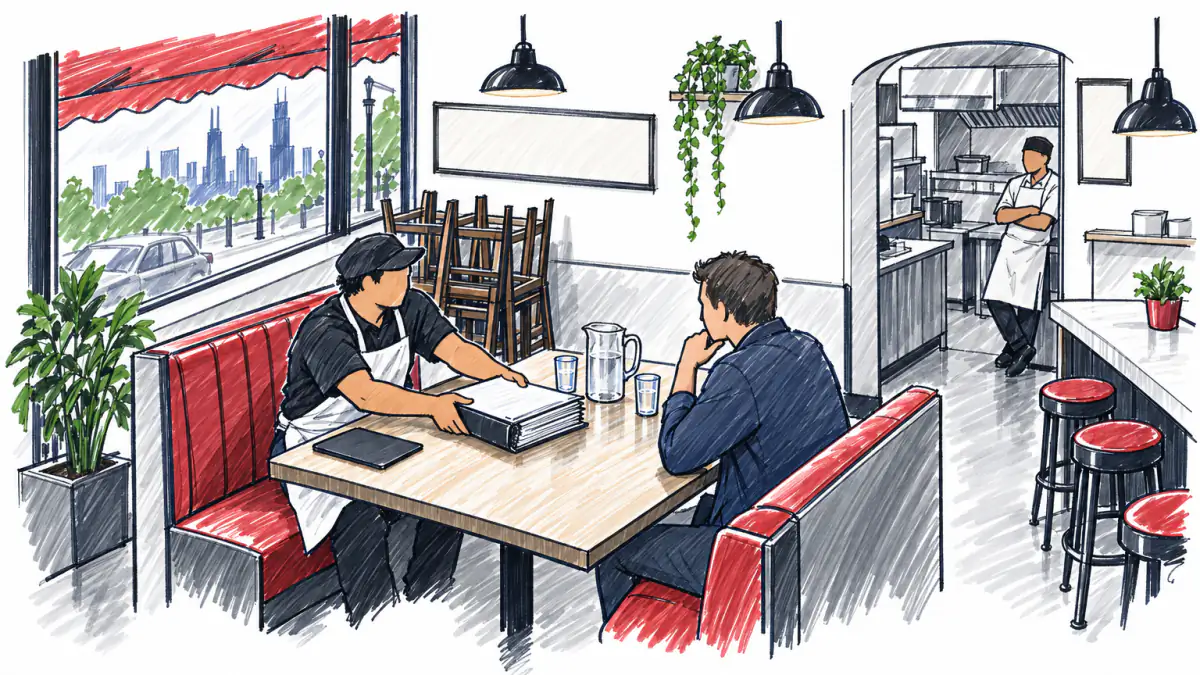
What to ask restaurant owners about a bookkeeping service
This example takes one idea check and turns its findings into questions. The idea, example by our method: “Monthly bookkeeping and payroll service for independent restaurants in Chicago: owners paying a flat fee to replace shoebox receipts and year-end scrambles”ex. In the example, the idea check returned the verdict Worth buildingex with a score of 69ex, based on 17 search queriesex and 28 sourcesex.
Desk research cannot tell you what owners pay now or how long they stay with a provider, and it says nothing about who handles payroll risk. Interviews close those gaps. No interviews were run on this check, so the table shows which questions the findings call for and which answer would weaken the idea. It shows no answers.
We wrote four rules for this guide that turn a check into questions:
- Every complaint theme the check counts becomes a “last time” question.
- Every direct competitor becomes a switching question.
- Every figure the check marks as an estimate becomes a question about money already spent or time already stayed.
- Every listed risk becomes a question about who handles that risk today.
| What the check found | What to ask | Answer that weakens the idea |
|---|---|---|
| Complaints in the example: Quality 3ex, Convenience 2ex, Service and support 2ex; no competitor answers the quality onesex | Q14: “When did your books last go wrong in a way that cost you?” | No dated error in the past year |
| In the example, 5 direct competitorsex; RemoteBooksOnline offers about 60% of the ideaex | Q20, Q21: “When did you last switch bookkeepers, and why?” | They switched recently and name nothing they miss |
| In the example, $550 a monthex and a 10-month lifeex are estimates from agency normsex | Q17, Q30: “What do you pay your bookkeeper a month, and since when?” | They pay well under that, or change providers every season |
| The first risk the check lists in the example: a payroll error could bring penaltiesex | Q23, Q24: “Who fixes a payroll error today?” | Their CPA carries that risk and they trust the CPA |
How the answers move the unit economics
In our example, the check’s unit economics look like this: a price of $550 a monthex at 1 purchase a monthex; a 40% marginex over a 10-month lifeex; a customer acquisition cost (CAC) of $900ex.
Our formulas, as the check applies them, in the example:
- LTV = price × purchases per month × margin × lifetime in months = 550 × 1 × 0.4 × 10 = $2,200ex.
- LTV:CAC = LTV ÷ CAC = 2,200 ÷ 900 = 2.44ex.
- Payback in months = CAC ÷ (price × purchases per month × margin) = 900 ÷ (550 × 1 × 0.4) = 4.1ex.
Each input maps to a question. Questions 17 and 30 test the price. Questions 34 and 39 test the lifetime, because they date when owners joined and left their last provider. Question 27 tests CAC, since a channel owners already use is cheaper to buy than a new one. Each extra month a client stays adds one month of margin to LTV. A lower price cuts both LTV and the monthly margin that pays back CAC. Put the numbers your interviews return into the unit economics calculator and compare them with the check’s estimate.
After each interview
Do this the same day, while the call is still fresh:
- Finish your notes before the next call. Memory drifts toward what you hoped to hear.
- Copy quotes word for word, with the question number they answered.
- Give each answer one tag: pain, frequency, cost, current tool, decision-maker or commitment.
- Record every number in its unit: hours a week, dollars, people, months.
- Note any commitment made: a follow-up date, an introduction, a document shared.
Across interviews, count the tags. A pain that shows up in most calls with a cost in hours or dollars is a pattern. A pain that shows up once is an anecdote, however vivid the story.
Decide whether to go on with this rule. Stay with the segment when the same pain repeats with a measured cost and people agree to follow-ups or introductions. Switch the segment or the problem when every call names a different pain, nobody can put a number on it and nobody offers a next step.
Once the pattern holds, interviews have done their job. Next, test demand with an offer people can act on: a sign-up or deposit measures what an interview only suggests.
FAQ
How many customer interviews do you need?
In a 2006 Field Methods study, Guest and colleagues found that saturation occurred within the first 12 interviews, with basic elements of the main themes present as early as six9. Use that as a starting count per segment, and stop when new interviews stop adding new pains.
How long should a customer interview take?
Plan 30 to 45 minutes (an assumption). That fits the two-minute opening, two or three of the six stages and the commitment ask at the end. A split that works for that length, also an assumption: about 10 minutes per stage, and the last 5 minutes for questions 32 and 33. Pick the stages before the call: for someone new, the last time it happened and pains and what they cost; for an existing customer, the current and former customers stage.
Tell the person the length when you book the call and again in the opening. Check the clock halfway through: if you are still on the first stage, move to pains and what they cost, and save the rest for a later call. When the time runs out, stop, even with questions left, and ask for a second call. A yes to that is the kind of small commitment question 32 counts.
How do you find people to interview?
Start with people who had the problem recently, since their memory of the last time is still specific. End every call with question 33, “Who else should I talk to about this?”, so each interview brings the next contact.
Can you record a customer interview?
Which questions should you never ask?
Skip hypothetical questions about your idea and its price, such as “Would you use this?” or “Would you pay this much?”; the rules table and the six “Instead of” lines above replace each one.
Is a customer interview the same as a customer service interview?
No. A customer service interview is a job interview for support staff. A customer interview is research with the people who have the problem you want to solve.
Customer interview or survey: which comes first?
Interviews first. An interview finds the answers you don’t know yet, and a survey then counts how often each of those answers occurs.
What is The Mom Test?
It is a book by Rob Fitzpatrick, first published in 20132. Its rules ask you to discuss the customer’s life rather than your idea and to ask about specific past events, while you listen more than you talk3.
Check your next idea before the interviews: Check your idea for free
Sources
- linkedin.com, 06/24/2025
- goodreads.com, 09/10/2013
- supersummary.com, 05/20/2026
- echai.ventures, 10/10/2026
- govinfo.gov, 12/12/2025
- ilga.gov, 09/04/2026
- california.public.law, 10/12/2026
- hbs.edu, 06/25/2026
- semanticscholar.org, 11/03/2025
Check your idea for free
Describe your idea and the check collects demand, competitors, complaints and prices, with sources.