How to Write a Business Plan: 9 Steps, the Numbers and a Worked Example

To write a business plan, first decide whether a lender, an investor or only you will read it; that choice tells you whether to write a full traditional plan or a short lean plan. Then write in the order the numbers need. Research the market and the competitors, set what you sell and the price, build the financial projections, write the sales, team and operations sections, and state the funding request. Write the executive summary last, even though it comes first in the finished plan.
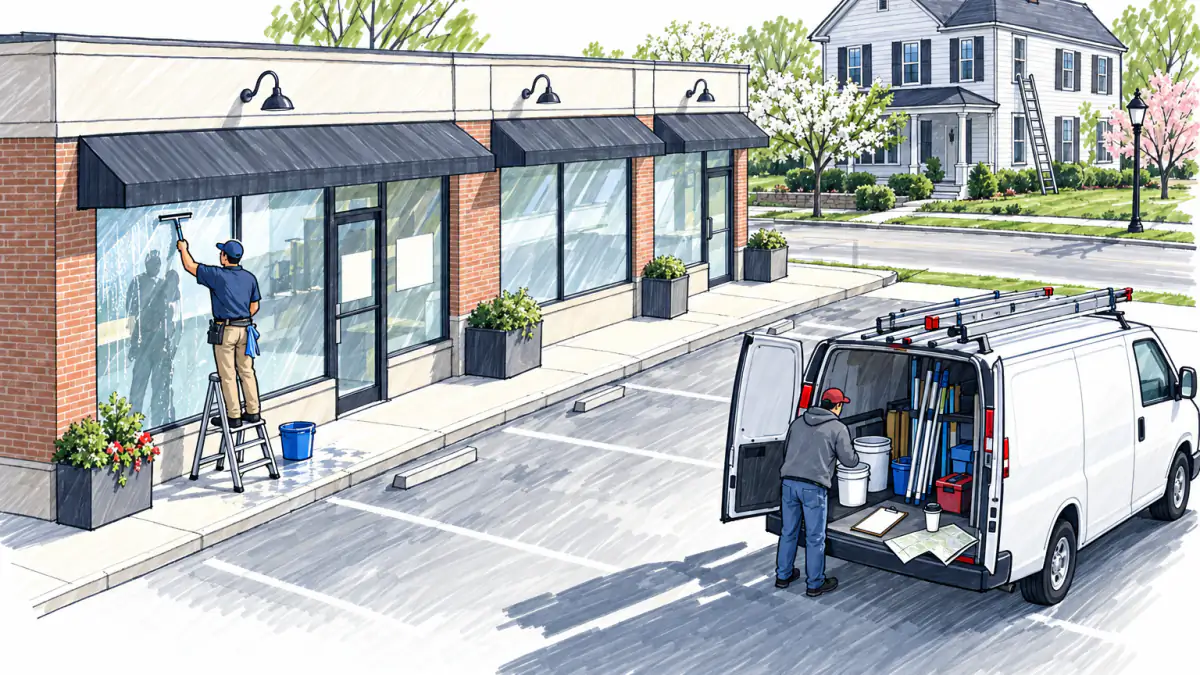
The check returns five inputs a plan needs: the market size, the competitors, the customer complaints, the unit economics and the risks.
What a business plan is and who reads it
A business plan is a written case for a business: what you sell, to whom and at what price, how you reach buyers, and how much cash you need before the business pays for itself. The reader sets its length and decides which sections need the most work.
| Reader | What they look for | Sections they open first |
|---|---|---|
| Lender | Proof you can repay from cash flow, plus your own stake | Financial projections, funding request |
| Investor | A market large enough for fast growth, and a team that can take it | Market, competition, team |
| You | Whether the idea works on paper before you spend on it | Unit economics, cash flow, risks |
The SBA sorts business plans into two formats: traditional and lean startup1. The traditional plan has nine sections, in this order: executive summary, company description, market analysis, organization and management, service or product line, marketing and sales, funding request, financial projections, and appendix2. The lean plan is typically one page1. It works through nine components, beginning with key partnerships and then key activities and key resources3.
Choose the traditional plan if a bank, an SBA lender or an investor will read it. Choose the lean plan if you are writing for yourself and expect the model to change after your first customer conversations. A lean plan can grow into a traditional one once its numbers hold.
Most owners write neither. A Gallup poll asked business owners about planning, and not all of them had a business plan. Among owner-employers, 40% have one: 29% an informal plan and 11% a detailed one4.
A consultant or an adviser at a small business development center can draft sections for you. The lender will still ask you about every figure in the meeting, so set the numbers and the claims yourself.
How to write a business plan in 9 steps
The finished plan reads in the SBA’s order, with the summary first. You write it in a different order, the one in which each section hands an input to the next:
- Reader and format: sets the length and the depth of every later section.
- Market: who buys and how many of them, the base of the sales forecast.
- Competition: the price range and the gap you will fill.
- Product and price: the unit every number in the plan uses.
- Numbers: the monthly cash flow and its lowest point.
- Sales and marketing: the sales forecast and the cost of winning a customer.
- This section covers the company and its team, plus operations: who does the work and what it costs.
- Funding request: the cash you need to get past the low point, plus a reserve.
- Executive summary: the figures from steps 2 to 8 on one page.
The numbers link into one chain. Price and unit economics drive the monthly cash flow; its lowest point sets the funding ask, and the ask goes into the executive summary. Market and competitor research produce the sales forecast, which also drives the cash flow.
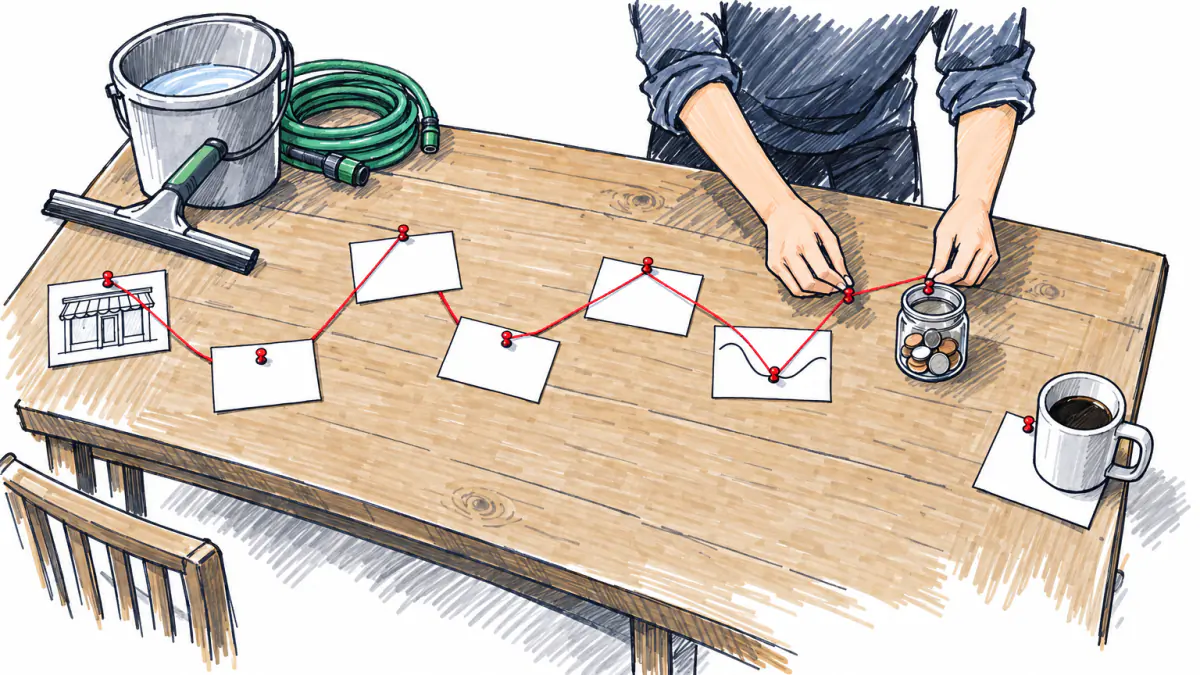
Step 1. Decide who reads the plan and pick a format
At the top of your draft, write who will read it: an outside reader such as a lender or partner, or only you. A lender reads for repayment, so the cash flow and the funding request get the most pages. An investor reads for growth, so put the market first and the team right after it. A plan for yourself can stay on one page.
This step hands the next ones a format (traditional or lean) and a depth for each section.
Step 2. Research your market and size it
The market section answers three things.
- Who buys. Describe a narrow group you can find and reach, such as owners of single-storefront shops in strip plazas along one suburban corridor. A broad demographic band tells a lender nothing about how you will reach the buyer.
- Market size. Cite a published estimate with its source and year, or build it bottom-up by multiplying the buyers you can reach by your price and by purchases a year. State which method you chose.
- How you know demand exists. Evidence is search demand, pre-bookings, deposits, signed letters of intent or a waitlist. If you have none, say so.
A published size often covers a whole country. Jobber, citing IBISWorld, puts U.S. window cleaning revenue at $2.9 billion in 2024 and $3.2 billion by 20295; our worked example uses the same $3.2 billion figureex. A route business in suburban Columbus reaches a small slice of that, so the plan gives the national figure as context and counts local buyers bottom-up.
In our example, the check found no demand sourceex. A plan in that case says demand is unproven and lists the gap as a risk, as the check does: “Without search-volume data, demand for spring cleans and monthly routes is unproven in this market”ex.
This step gives step 6 its buyer and the starting count for the sales forecast.
Step 3. Size up the competition
Count every direct competitor first, then pick three to five to study. BDC advises choosing companies that serve the same market and are slightly older than yours, not massive well-known brands6. For each one, write down what it offers, its published price, what its customers complain about and what it lacks. Customer reviews hold most of the complaints.
In our example, the check counted 9 direct competitorsex. Each of the three most visible had 17% of visibility in the check’s search resultsexexex. Since no firm holds more, the plan can argue that a new operator wins customers on service.
This step hands step 4 a price range and step 6 the gap your message names.
Step 4. Describe what you sell and set the price
Write the products and services section as answers to the reader’s questions:
- What exactly do you sell, and what is included?
- Who buys each offer?
- How is it delivered, and how often?
- What does it cost the buyer, and how did you arrive at that price?
The price is the unit every later number uses, so define it per job or per month, or per item if you sell goods. In the example by our method, one storefront cleaning costs $200ex and the route customer buys once a monthex. That unit covers the monthly-route shop owner only. The spring-clean homeowner is a second offer with its own price and frequency, which the check did not model. Set those from your own quotes and label them as assumptions.
This step hands step 5 the price and the purchase frequency.
Step 5. Build the numbers before the words
The SBA advises projecting finances five years ahead, with monthly or quarterly figures for the first year1. An established business also includes the last three to five years of financial statements: income statements and balance sheets, plus cash flow statements1. A startup has no history, so its projections rest on the unit economics in the section “Where each number comes from” below.
| Statement | What goes in it | A window cleaning line |
|---|---|---|
| Profit and loss | Revenue, direct costs, gross margin, overhead and net profit, by month | Route revenue; labor, purified water and fuel as direct costs |
| Cash flow | Cash in and cash out by month, with opening and closing balances | The month you pay for the van against the month the first route invoices are paid |
| Balance sheet | What the business owns, owes and the owner’s equity on a date | The van and pole system as assets; an equipment loan as a liability |
To find break-even, subtract the variable cost per job from the price per job and divide monthly fixed costs by the result; that gives the jobs per month that cover costs. Put that count next to your sales forecast. If the forecast reaches it late, the cash flow will show a deep low point.
List startup costs as items before you price them. For a mobile window cleaning business, the list holds:
- a vehicle, bought, leased or adapted
- ladders and safety gear
- a water-fed pole system and water purification unit
- squeegees and applicators, plus consumables
- general liability insurance, and workers’ compensation once you hire
- business registration and any local licenses
- a website, plus software for booking and invoicing
- marketing for the months before revenue arrives
Then find the cash low point. Add the monthly net cash flow month by month from the opening balance. The month where the running total is lowest is your cash low point, and it is the input to step 8.
This step hands step 6 a revenue line to match, and step 8 the low point.
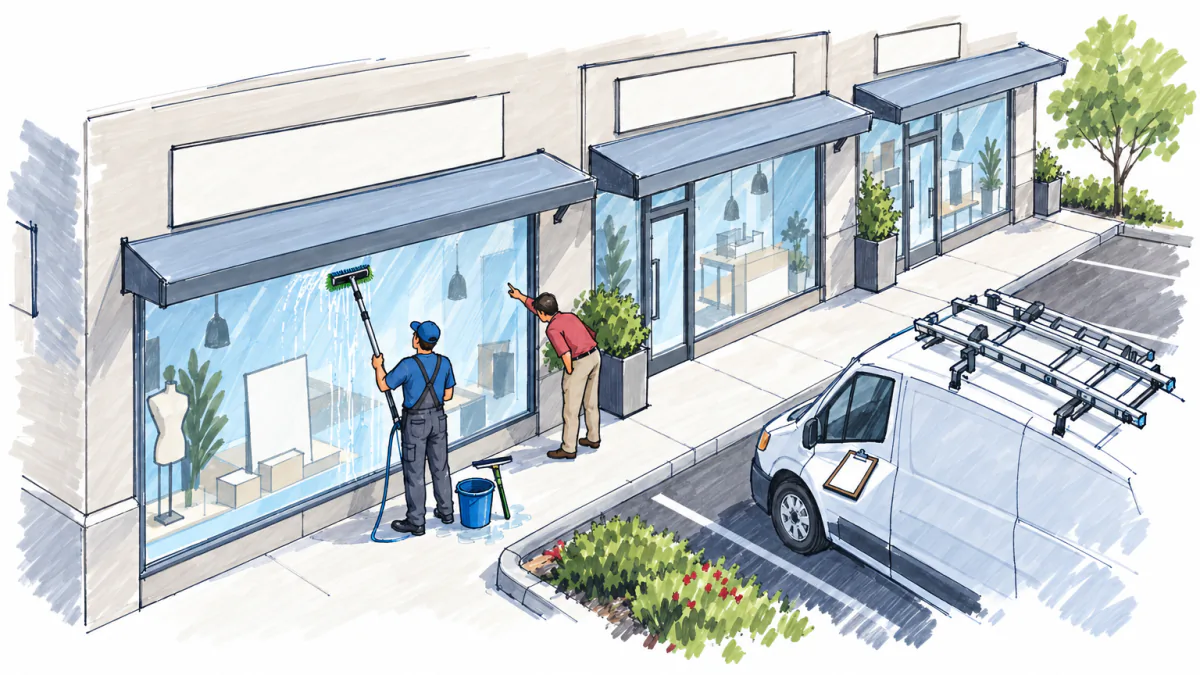
Step 6. Plan sales and marketing as three activities
The sales forecast repeats the step 5 arithmetic month by month: customers × price × purchases a month. When it disagrees with the revenue line in the profit and loss, a reader trusts neither.
Pick three activities and give each a frequency and a cost, plus a metric to track:
| Activity | Frequency and cost | Result and metric |
|---|---|---|
| Walk storefront plazas with a printed route offer | Weekly; your time plus printing | Signed route customers; sign-ups per plaza visited |
| Door hangers in two-story neighborhoods before spring | Once each spring; printing and delivery | Booked spring cleans; bookings per batch delivered |
| Review request after every job | Every job; no direct cost | Public reviews; reviews per completed job |
Your cost of acquiring a customer is total marketing spend divided by new customers in the same period. Measure it from the first month.
Build the message from the complaints you collected in step 3. In the example by our method, quality led the complaints at 3ex, so the message promises a standard: a streak check before you leave and a free re-clean if a window fails it. The value proposition is the one sentence that names that promise for that buyer.
This step hands step 7 the staff the forecast needs, and step 5 the acquisition cost.
Step 7. Describe the company, team and operations
The company description is a short checklist:
- legal name and structure
- location and service area
- start date, or history if you already operate
- mission in one sentence
- measurable goals, each with a number and a date
Test the value proposition in conversations with buyers before you write it into this section.
The team section is a table of who answers for what. List unfilled roles as planned hires or outsourced work.
| Person | Role | Answers for |
|---|---|---|
| Founder | Owner and lead technician | Pricing, sales, quality checks |
| Planned hire | Cleaning technician | Routes on schedule, safety on ladders |
| Outsourced | Bookkeeper | Monthly statements, tax filings |
The operations section grows with the business. For a two-person route business, one page is enough: how you group and schedule routes, which vehicle and equipment you use, the insurance you carry, how you reschedule after weather delays, and how you check quality on each job.
This step hands step 5 the payroll and overhead lines, and step 9 the team sentence.
Step 8. Write the funding request from the cash low point
The ask is the cash low point from step 5 plus a reserve you name and justify, such as a set number of months of fixed costs. A lender who can trace the amount to a month in your forecast has fewer questions about it.
The SBA advises the request state how much funding you need over the next five years, what you will use it for, whether you want debt or equity, the terms you would like and the length of time the request covers1. If an investor will read the plan, the same figures go into the pitch deck.
This step hands step 9 the ask.
Step 9. Write the executive summary last
Write the summary last, because it condenses figures from steps 5 and 8. Bank of America advises three to five paragraphs on what the business does, why it will succeed and where it will be in five years7; Salesforce advises 300 words or less8. Three to five short paragraphs meet both.
Open with the buyer’s problem and your solution at its price; follow with the evidence and close with the ask. A sample written from a real check is at the end of the worked example below.
Where each number comes from
Every figure in a plan is one of three kinds:
- Measured: your own sales, quotes, bookings or timed jobs.
- Sourced: a published figure, given with its link and year.
- Assumption: labeled as one in the same sentence.
A reader who finds one unlabeled guess starts doubting the measured figures too. Label as you write, not at the end.
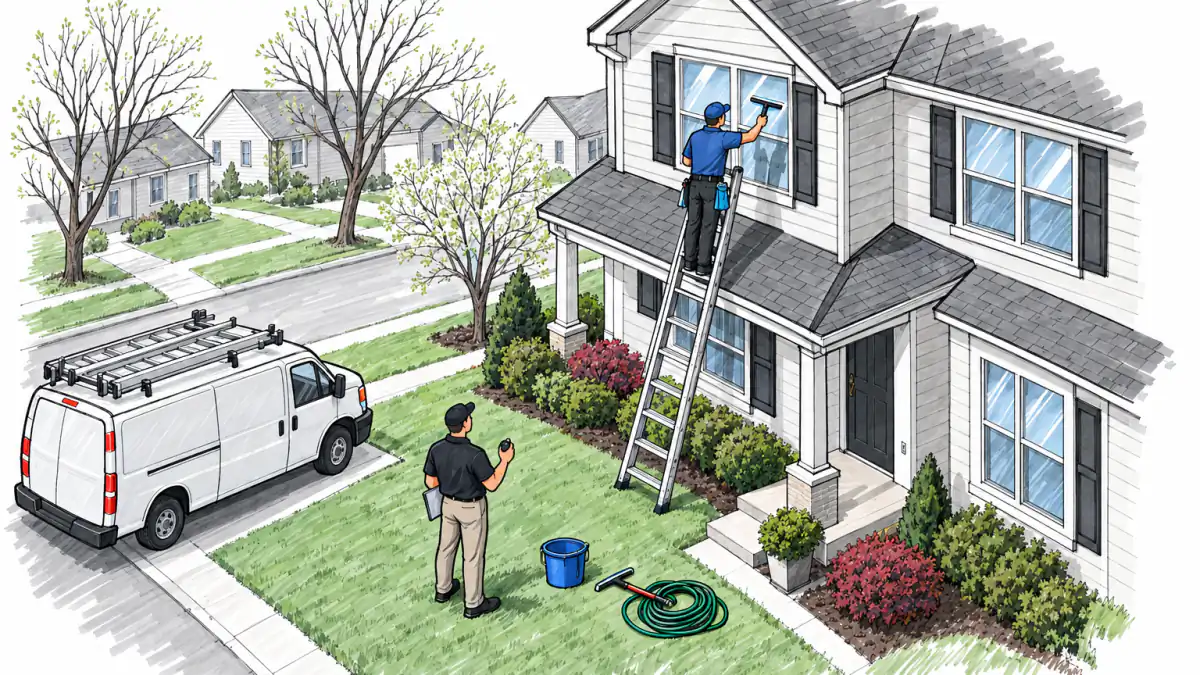
Unit economics come from five inputs: price, purchases a month, margin, cost of acquiring a customer (CAC) and customer lifetime in months. Here are the formulas as our check applies them.
| Quantity | Formula | Example by our method |
|---|---|---|
| Monthly contribution per customer | Price × purchases a month × margin | $200 × 1 × 0.35 = $70exexex |
| LTV (lifetime value) | Monthly contribution × lifetime in months | $70 × 12 = $840exex |
| LTV to CAC | LTV ÷ CAC | 840 ÷ 30 = 28exex |
| Payback, months | CAC ÷ monthly contribution | 30 ÷ 70 ≈ 0.4ex |
The check labels its own inputs. It reports no demand sourceex and states that the unit economics “are an estimate from a general local services category, not measured in Columbus, so the margin and payback may not hold”ex. An LTV-to-CAC of 28 built on category averages is a hypothesis to test. A lender will read it as one, and your plan should call it one.
Worked example: a window cleaning plan from an idea check
The idea, example by our method: “Mobile window cleaning service for storefronts and two-story homes in suburban Columbus, Ohio: shop owners on monthly routes and homeowners booking spring cleans”ex. The check ran 17 search queriesex and read 24 sourcesex. Its verdict was “Possible, with caveats”ex, with a score of 57ex.
What the check fills and what you still write
| Plan section | What the check gives | What you still write |
|---|---|---|
| Market | U.S. size of $3.2 billion by 2029ex; no demand sourceex | A bottom-up count of local storefronts and homes on your routes |
| Competition | 9 direct competitorsex; visibility shares of 17%, 17%, 17%, 11% and 11%exexexexex | Prices and offers of the three to five you study |
| Customers | Complaint themes and counts | Interviews with shop owners on your planned route |
| Unit economics | Price, frequency, margin, CAC, lifetime and the results | Your own timed jobs and acquisition cost |
| Risks | Four risks with likelihood and impact | The test for each risk and its date |
| Startup costs | Nothing | The item list from step 5, priced from quotes |
| Team | Nothing | The team table from step 7 |
| Operations | Nothing | Routes, equipment, insurance, quality checks |
| Funding ask | Nothing | The cash low point plus a reserve |
All figures in this table are examples by our method.
The complaints become the message
In the example by our method, quality drew 3 complaintsex, and each other theme drew 1: reliability and trustex, priceex, paperwork and paymentex. Because quality leads, the marketing section promises a checked result and a re-clean. The route offer answers reliability with a fixed day each month, and one monthly invoice with card payment on file answers paperwork.
The unit row is a hypothesis
The example’s route customer pays $200ex once a monthex at a 35% marginex over 12 monthsex; winning that customer costs $30ex (example by our method). The result is an LTV of $840ex and an LTV to CAC of 28ex, with payback in 0.4 monthsex. Read literally, the first cleaning repays the cost of winning the customer.
The inputs come from a general local-services category. In our example, a door-to-door sales week in a Columbus plaza may cost more than the example’s $30 per signed customer, and a two-story job may take longer than the category margin allows. Your plan states the row as the target, then replaces each input with a measured figure as jobs come in.
The risks become the risk section
Each risk in the example by our method gets a test that would retire it.
- “Buyers may see the closest competitor as enough, since it already offers about 70% of the idea, so the monthly route offer has little room to stand out”ex. Test: ask shop owners on the planned route what their current cleaner misses, and whether a fixed monthly day with a re-clean promise would make them switch.
- “Without search-volume data, demand for spring cleans and monthly routes is unproven in this market”ex. Test demand before you launch: take deposits for spring cleans and signed route agreements before you buy the pole system.
- “Unit economics are an estimate from a general local services category, not measured in Columbus, so the margin and payback may not hold”ex. Test: time and cost your first jobs, and record marketing spend per signed customer.
- “Quality complaints in the category could hurt a new operator’s reputation if service is uneven”ex. Test: use a written checklist on every job and track re-clean requests per completed job.
A sample executive summary
The sample below is written only from the check’s figures (example by our method).
Storefront owners in suburban Columbus need clean windows every month, and quality is the most common complaint about local window cleaners, with 3 quality complaints in our reviewex. We offer a monthly storefront route at $200 per cleaningex, on a fixed day, with a streak check and a free re-clean, plus spring cleans for two-story homes. U.S. window cleaning revenue is projected at $3.2 billion by 2029ex. Nine direct competitors serve the areaex, and none holds more than a 17% visibility shareex. Our target unit economics are a 35% marginex and a $30 acquisition costex, which we will replace with measured figures from our first route customers.
Three sentences are yours to add, because no check can know them. One gives your startup costs from supplier quotes, one describes your team, and one sets your funding ask from the cash low point.
Mistakes that sink a business plan
- An unlabeled assumption. Fix: in the same sentence, mark each figure as measured or sourced, or as assumed.
- A national market size presented as yours. Fix: give the national figure as context and count local buyers bottom-up.
- A sales forecast that does not match the profit and loss. Fix: build both from customers × price × purchases a month.
- A household-name brand listed as the competitor. Fix: study three to five comparable firms that serve your market6.
- A funding ask with no tie to the forecast. Fix: take the cash low point and add a named reserve.
- A first-year forecast only. Fix: project five years, with the first year monthly or quarterly1.
- A summary written first. Fix: write it after the numbers and the ask exist.
List your business risks before launch in the plan itself. A lender who finds a risk you left out stops trusting the risks you listed.
Business plan template and final checklist
Lay the finished plan out in the SBA’s nine sections, in this order: executive summary; company description; market analysis; organization and management; service or product line; marketing and sales; funding request; financial projections; appendix2. Fill each from the step that produced it. Before you send it, check one line per step:
- The market section names the buyer, the size with its source and year, and the demand evidence or its absence.
- Three to five comparable competitors are compared on offer and price, and on what customers complain about.
- The price is defined per unit, with the purchase frequency.
- The cash flow is monthly for year one, and its low point is marked.
- The sales forecast and the revenue line match month by month.
- The team table lists every role, including planned hires.
- The funding request states the amount, the use, debt or equity, and the terms.
- The executive summary repeats only figures found elsewhere in the plan.
FAQ
How long should a business plan be?
What financial statements go in a business plan?
A profit and loss statement, a cash flow statement and a balance sheet. The SBA advises five years of projections, with monthly or quarterly figures in the first year; an established business also adds three to five years of past statements1.
How long is an executive summary, and when do I write it?
How do I do the market analysis section?
Describe a narrow buyer group you can reach. Size the market with a published estimate and its source and year, or count it bottom-up. Then show demand evidence such as deposits or pre-bookings, or state that demand is unproven.
What should the products and services section say?
Say what you sell and who buys each offer, then cover delivery (how and how often) and the price with its reasoning. Define the price as the unit the financial projections use.
Can someone else write my business plan?
Yes. A consultant or a small business development center adviser can draft it. You set the numbers and claims, because the lender will ask you about each one.
Is a business plan still worth writing?
Write one if a lender or investor will read it, or if you want to test the idea on paper before you spend. A one-page lean plan1 covers the second case. In Gallup’s 2026 poll, 71% of business owners said they had no business plan4.
Check your idea for free to get the market size, competitors, customer complaints, unit economics and risks for your own plan.
Sources
- sba.gov, 09/08/2026
- sbdcnet.org, 04/28/2026
- legacy.sba.gov, 10/02/2026
- news.gallup.com, 05/27/2026
- getjobber.com, 05/31/2024
- bdc.ca, 09/12/2020
- business.bankofamerica.com, 09/26/2024
- salesforce.com, 10/16/2026
Check your idea for free
Describe your idea and the check collects demand, competitors, complaints and prices, with sources.