


How to Start a Small Business: 10 Steps From Idea to First Sale

To start a small business, test the idea before you spend money. Check that people search for it, who already sells it, what buyers complain about, and whether one customer brings in more than it costs to win them. Then set up the business in this order: a short plan, funding, a legal structure, state registration and an EIN, licenses and insurance, and a business bank account. We show each step below on a real check of a home bakery idea in Phoenix.

- Test the idea before you spend
- Run the numbers
- Write a one-page plan first
- Fund the business
- Choose a legal structure
- Name it, register it, get an EIN
- Licenses and permits, plus insurance
- Open a business bank account and set up taxes
- Get online and land the first customers
- Hire when the work outgrows you
What you need before you start
| item | who issues it | when you need it |
|---|---|---|
| A tested idea | you, with an idea check | before you spend money |
| A list of costs | you | before you look for funding |
| A legal structure | your state, for an LLC or corporation | before you register |
| An EIN | the IRS | before you open an LLC bank account or hire |
| Licenses and permits | your city, county and state | before the first sale |
| Insurance | an insurer | before the first sale; workers’ comp before the first hire |
| A business bank account | a bank | before the first payment comes in |
If you have no idea yet, find an idea first and come back to step 1 with it.
Step 1. Test the idea before you spend
An idea check answers five questions. For each one, some results give you an answer and others mean you still don’t know. Our rule: when a figure is missing, we report it as unknown and list it as a risk. We never fill it with a guess.
| question | what you look up | it holds when | it is unknown when |
|---|---|---|---|
| Do people look for it? | search demand for the phrases buyers use | you have a measured demand figure | no demand data exists; list it as a risk |
| How big is the market? | a published market size with its source and year | the figure is dated and sourced | nothing is published |
| Who already sells it? | direct competitors and their share of search visibility | you can name them and their share | you find none |
| What do buyers complain about? | complaints in rivals’ reviews, grouped by theme | you see themes you can fix | there are no reviews |
| Does one customer pay back? | unit economics (step 2) | LTV is at least 3 × CAC (assumption: our house rule, not a law) | the inputs have no data behind them |
The check also rates each risk by probability and impact and rolls the answers into a score and a label. We quote the score as the check prints it and do not publish a weighting.
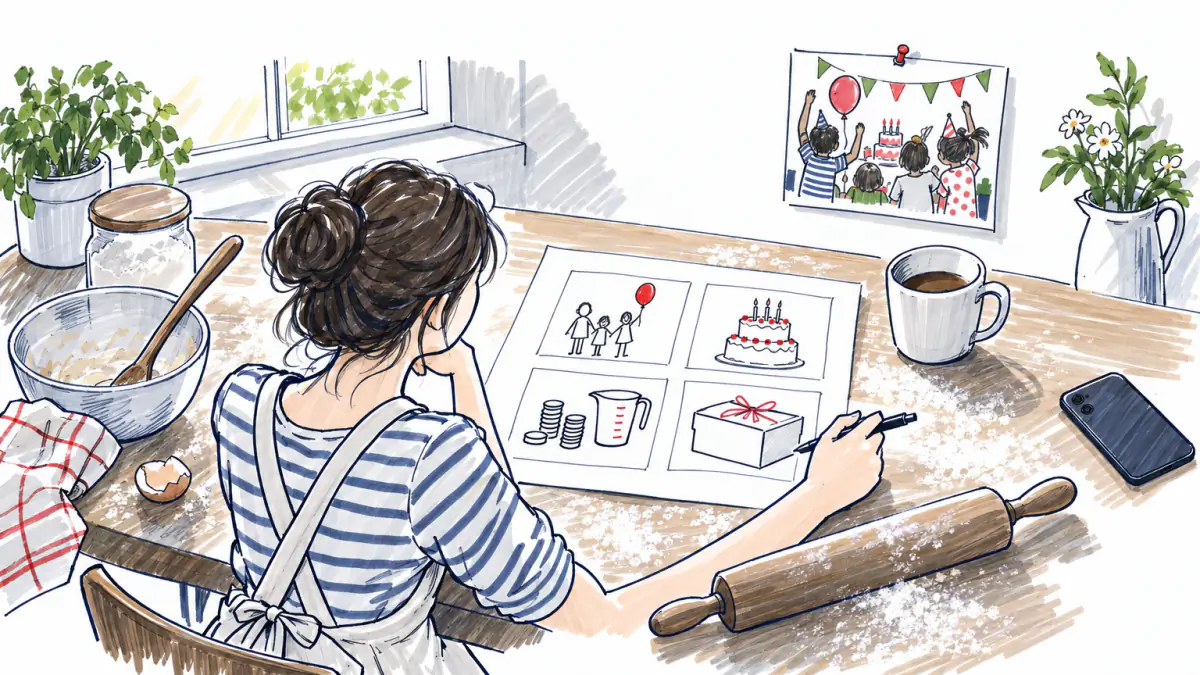
What to look up
- Search demand: the phrases a buyer types, and whether anyone measures them.
- A published market size: estimate the market size, then write down the source and the year.
- Rivals in search: see who already sells it, and note who takes the top results.
- Complaints: read rivals’ one- and two-star reviews and count how often each theme comes up.
Cheap demand tests
When search data is missing, you can make your own. Test demand before you build with the cheapest test that fits the business:
| business type | cheapest test |
|---|---|
| Local food or service | a presale with a deposit, sold to people in your area |
| Online product | a landing page with a waitlist, plus a small ad test |
| Physical product | a crowdfunding page with a funding goal |
| Service for companies | interviews with buyers, ending in a request for a paid pilot |
Stripe’s guide uses a 2% click-through rate on a small ad test as a sign of interest1. Treat that as one company’s heuristic. A deposit or a paid order is stronger evidence than a click.
Stop and rethink if you cannot name one rival, if nobody pays a deposit, or if every complaint you find is about price alone.
Step 2. Run the numbers
List your costs before you look for money. Split them into one-time and monthly, and note where each figure comes from.
| cost | one-time or monthly | where your figure comes from |
|---|---|---|
| Equipment and tools | one-time | supplier quotes |
| Registration, licenses, permits | one-time, some renew yearly | your state and city fee schedules |
| Insurance | monthly or yearly | quotes from insurers |
| Ingredients or materials per order | per sale | your supplier prices |
| Ads and listings | monthly | the ad test from step 1 |
| Software, website, phone | monthly | the plans you pick |
Then work out unit economics, the money one customer brings in against the cost of winning them. We use four formulas, named as in the check:
- monthly contribution = price × purchases per month × margin
- LTV = monthly contribution × customer lifetime in months
- LTV/CAC = LTV ÷ CAC, where CAC is the cost to win one customer
- payback in months = CAC ÷ monthly contribution
Our reading rule is an assumption, a house rule of thumb. An LTV/CAC of 3 or more holds. From 1 to 3 is thin. Below 1, each new customer loses money.
Run your own inputs in the unit economics calculator. It opens with the bakery example below as its preset.
The example: a home bakery in Phoenix, checked
We ran the idea check on one idea and walk through each answer here. The idea, quoted from the check: «Home-based cottage bakery selling custom birthday cakes and cookie boxes by pre-order in suburban Phoenix: parents planning kids’ parties»ex.

The verdict: «Worth building», score 66, and what it means
The check labeled the bakery idea «Worth building»ex with a score of 66ex (example by our method). It ran 17 search queriesex and read 29 sourcesex to reach that verdict.
The score combines the five answers from step 1 with the risk ratings. The label is the check’s plain-words reading of that score. We quote both as the check prints them. We publish no weighting or cutoff, so don’t read 66 on its own. Read it next to the answers below.
For the bakery, «Worth building» means three things. The check could name rivals. It found complaints a new baker can fix. The unit economics hold by our reading rule. The label does not mean demand is proven. A positive label still leaves gaps, and the first one is demand.
Demand and market size
No search-volume data was found for this idea (example by our method)ex. Demand is therefore unknown. The check found a published market size of USD 6,272.17 million for 2024, from credenceresearch.comex. That figure describes a broad market, not the orders one home baker in Phoenix can expect.
Rivals and complaints
The check counted 10 direct competitors (example by our method)ex. The five with the largest share of search visibility:
| competitor | visibility share |
|---|---|
| Silver Rose Bakery | 32%ex |
| The Velvet Buttercream | 17%ex |
| The Cravory | 16%ex |
| Bake Me A Wish | 8%ex |
| Nothing Bundt Cakes | 5%ex |
In our example, the top three together hold 32 + 17 + 16 = 65% of visibility. A new bakery starts below all of them in search.
Buyers’ complaints fell into three themes in the example: quality, 3 complaintsex; reliability and trust, 3ex; availability and minimum order, 1ex. A new baker can answer the first two. One option is to show photos of past orders and give each customer a fixed pickup slot. That is our suggestion, not data from the check.
Unit economics
The check’s inputs (example by our method): a price of $55ex, 1 purchase a monthex, a 12% marginex, a customer lifetime of 10 monthsex and a CAC of $20ex.
Run the formulas. 55 × 1 × 0.12 = $6.60 of contribution a month (example by our method)exex. Times 10 months gives an LTV of $66ex. Divided by the $20 CAC, that is an LTV/CAC of 3.3ex. The $20 CAC divided by $6.60 a month gives a payback of about 3 monthsex. By our reading rule, 3.3 holds.
The check assumed one order a month for ten months. Nobody measured repeat orders. People buy birthday cakes around birthdays, so test this input first: run a presale, then offer cookie boxes as a follow-up.
Risks
The two risks the check rated highest for impact (example by our method):
- «Customers already complain about bakery quality, and a home kitchen with no track record may repeat the problem.»ex
- «Food safety rules for home kitchens may block or delay sales in Arizona.»ex
The other two:
- «Buyers have a close alternative in The Velvet Buttercream, which already offers about 40% of the idea, so orders may go there instead.»ex
- «No search-volume data exists, so the real number of buyers searching for this is unknown.»ex
The Arizona rule is a setup question, covered in step 7. The demand gap and the repeat-order input are the first two things to test.
Step 3. Write a one-page plan first
A one-page plan answers four questions:
- Who buys, and how you reach them.
- What problem you solve for them.
- How you make money: price, cost per order, how often they buy.
- What makes you different from the rivals you found in step 1.
For the bakery, the answers come straight from the check: parents planning kids’ parties, a custom cake with a fixed pickup time, the unit economics above, and a fix for the complaints rivals get.
Write the long, traditional plan when a lender or an investor asks for one. Until then, update the one-page plan after each test. Your business name does not change anything in the plan, so you can pick the name later, in step 6.

Step 4. Fund the business
Choose the cheapest money that covers the cost list from step 2. Each option has a trade-off.
| option | what you give up | when it fits |
|---|---|---|
| Your own savings | personal risk | small costs, and money you can lose |
| Presales and deposits | a promise to deliver on a date | pre-order businesses like the bakery |
| Friends and family | some of a relationship, sometimes equity | when you write the terms down |
| Crowdfunding | a public deadline and rewards to ship | physical products with a clear audience |
| SBA microloan, up to $50,0002 | repayment with interest | small equipment and working capital |
| SBA 7(a) loan, up to $5 million2 | repayment, paperwork, often collateral | larger, established plans |
| A strategic partner | a share of profit or control | when the partner brings customers or supply |
| Investors | equity and some control | businesses built to grow fast |
Our rule for your own money: commit only what you can afford to lose. You keep full ownership, and a failed test does not leave you in debt.
SBA loans come through lenders that work with SBA programs2. Expect to show a plan and your cost list.
Step 5. Choose a legal structure
You form an LLC or a corporation with your state. The IRS classifies the business for tax afterward. The two are separate steps, and the state filing comes first.
| structure | your personal liability | how profit is taxed | paperwork to expect |
|---|---|---|---|
| Sole proprietorship | you are personally liable | on your own return; self-employment tax on Schedule SE3 | a DBA if you trade under another name4; local licenses |
| General partnership | each partner is personally liable | passes to the partners’ returns | a written partnership agreement |
| LLC | members’ personal assets are generally shielded | passes through by default; can elect corporate tax | articles of organization filed with the state5 |
| Corporation | shareholders’ personal assets are shielded | taxed as a company, or as an S corporation by election | articles of incorporation, bylaws, yearly filings |
Choose a sole proprietorship if you test the idea alone and a lawsuit is unlikely. Choose an LLC if customers can be harmed by your product, which includes food. Choose a corporation if you plan to raise money from investors. Ask a lawyer or an accountant in your state before you file; fees and rules differ by state.
Step 6. Name it, register it, get an EIN
Check the name in this order:
- Your state’s business name database.
- The USPTO trademark search.
- The domain and social media handles; check a name and its domain.
- A DBA filing, if you will trade under a name other than your legal one.
A DBA gives no legal protection, but your state may require it, depending on your structure4. Federal trademark registration is optional. In the US, trademark rights come from using the mark in commerce, and registration adds to those rights6.
Registration happens at three levels:
| level | what you file | who files it |
|---|---|---|
| Federal | an EIN application with the IRS | LLCs and corporations opening a bank account5, and anyone who will hire |
| State | articles of organization or incorporation; a DBA where required; state tax registration | LLCs and corporations; businesses trading under another name |
| Local | a business license and permits | depends on your city and county |
The EIN application is free. The IRS warns against websites that charge for it7. The IRS issues one EIN per responsible party per day8. If you need one for each of two businesses, plan for two days.

Step 7. Licenses, permits and insurance
Licenses depend on what you sell and where. Ask your local and state licensing offices which licenses cover your business. A contractor answers to a different board than a hair stylist or a food seller does.
Food is the strictest case. Arizona lets home bakers sell certain foods once they register with the Arizona Department of Health Services, and only approved foods qualify9. For the bakery in the example, this is the risk the check flagged: home-kitchen rules «may block or delay sales in Arizona»ex. Register before you take the first presale. In another state, look up its cottage food rules before you print a menu.
Running it from home
Zoning rules can limit a home business. Ask your city whether you need a home occupation permit and whether customers may pick up orders at your door. For food, the state’s home-kitchen rules apply on top of the city’s rules.
Insurance
Insurance splits into what the law requires and what protects you:
- Required: workers’ compensation once you hire. Every state except Texas requires employers to carry it, with some exemptions for small employers10.
- Advisable: general liability, product liability if people eat or use what you sell, and a business owner’s policy (BOP), which bundles common types of cover.
We give no premium figures here, because we have no source for them. Get two or three quotes for your own business.
Step 8. Open a business bank account and set up taxes
A separate account keeps business money apart from yours, which you need at tax time and if the LLC’s liability shield is ever tested.
What to bring:
- Sole proprietor: your ID, your DBA certificate if you have one, and whatever tax number the bank asks for.
- LLC or corporation: the EIN and a formation document such as the articles of organization5, plus your ID.
Ask the bank for its document list before you visit.
Taxes come in two parts for a self-employed owner. You figure self-employment tax on Schedule SE and file it with your yearly Form 1040. You pay estimated tax during the year with Form 1040-ES3. Set aside part of each payment you receive for those quarterly bills.
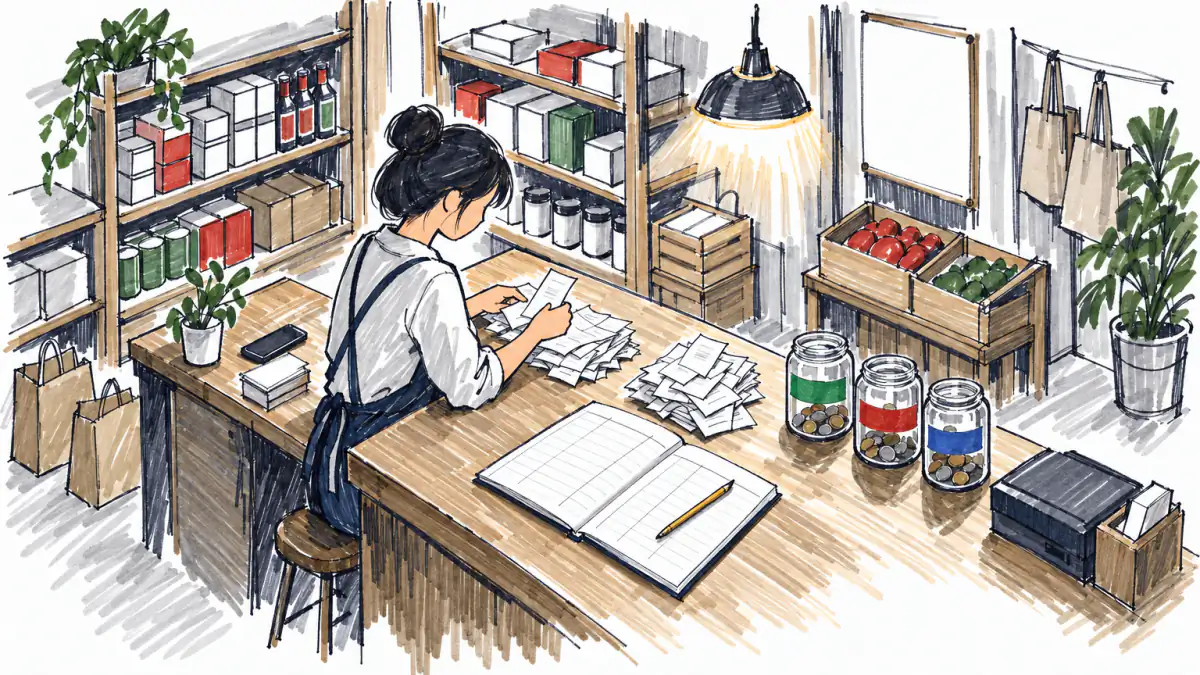
Step 9. Get online and land the first customers
Start in the channel where your rivals already sell. In the example, rivals compete for local search visibility, so the bakery starts with a local listing that shows past cakes with prices and takes pre-orders. A website can wait until orders come in.
Your first customers are the people from step 1: anyone who paid a deposit or joined the waitlist, plus the people you interviewed. Deliver their orders, ask for a review, and offer a second order. For the bakery, that second order answers the input the check could not measure.
Before you email customers in bulk, read the federal CAN-SPAM rules and add an unsubscribe link to every message.
Step 10. Hire when the work outgrows you
Hire when you turn orders away or miss delivery dates, and the numbers from step 2 still hold with a wage added. Before the first employee:
- Get workers’ compensation cover; every state except Texas requires it10.
- Register as an employer with your state.
- Get an EIN if you do not have one; the application is free7.
Consider a contractor for peaks, such as birthday season for the bakery, before you take on a permanent wage.
How this guide was made
We read the pages that rank in Google for this query and noted what each one leaves out: an ordered list of steps, a way to judge an idea, and a worked example. The example is one idea check made on 2026-10-11. It ran 17 search queriesex and read 29 sourcesex, example by our method. Every external figure links to its source.
This guide is general information; it is not legal or tax advice. Each state and city sets its own registration and tax rules, including which licenses you need. Before you file, confirm with your state’s offices or a licensed professional.
FAQ
How much does it cost to start a small business?
It depends on the model, and we found no sourced ranges to quote. List your one-time and monthly costs in the table from step 2, and back each line with a quote or a fee schedule.
Can you start a business with no money?
You can start with presales and deposits, which fund the first orders before you spend. Commit only money you can afford to lose.
How do I know if my business idea is good?
Answer the five questions in step 1: demand, market size, rivals, complaints and unit economics. If an answer is unknown, list it as a risk and test it first, as in the bakery example.
Do I need a business plan to start?
Start with one page that answers who buys, what problem you solve, how you make money and how you differ. Write a traditional plan when a lender or investor asks for one.
Do I need an LLC?
No. Choose an LLC if your product can harm customers or you want your personal assets separated from the business. Banks will ask an LLC for its EIN and articles of organization5.
Do I need an EIN as a sole proprietor?
You need one to hire, and many banks ask for one. Check the IRS EIN page for your case. The application is free7.
Do I have to trademark my business name?
Can I run a small business from home?
Yes, if your city’s zoning allows it. Ask about a home occupation permit. For food, follow your state’s home-kitchen rules; Arizona requires registration with its health department9.
Sources
- stripe.com, 10/11/2026
- sba.gov, 09/16/2026
- apps.irs.gov, 09/22/2026
- sba.gov, 08/28/2026
- chase.com, 10/03/2026
- uspto.gov, 03/25/2026
- irs.gov, 03/10/2017
- irs.gov, 10/03/2026
- extension.arizona.edu, 10/02/2026
- ssa.gov, 10/03/2026
Check your idea for free
Describe your idea and the check collects demand, competitors, complaints and prices, with sources.


Comments 3 comments
Dan Reyes San Diego
Could you add a version for someone starting part-time while keeping a day job?
Julia Hart Charlotte
The order is what helped: test demand, then the money, then the EIN and the bank account. I had it backwards.
Mike Doran Phoenix
I was about to sign a lease for a sandwich shop. Running the numbers first, as step 2 says, showed I needed twice the foot traffic the street has.
Have a question or a view on the article? Ask Fox.