Local SEO: How It Works and How to Do It in 7 Steps

Local SEO is the work that gets your business shown when people nearby search for what you sell: in Google's map pack, in the regular results under it, and in Google Maps. Google says relevance and distance drive its local ranking, along with prominence1. You control relevance and prominence through your Business Profile, your site, your reviews and your mentions on other sites. You control distance only by setting your address or your service area.
See which shops already hold visibility in your niche and what customers complain about, before you spend on SEO.
Key takeaways
- Google ranks local results mainly on relevance and distance, plus prominence1. Your work moves the first and the third.
- The plan in seven steps: know your model, complete your Business Profile, find local phrases, build service pages, earn reviews, get listed and mentioned, track results.
- Local search is worth your hours when it brings customers in below the cost your margin allows.
- In our worked example (example by our method), price drew 6 complaintsex, the most of any theme, so price leads the profile and the review replies.
What local SEO is and where your business shows up
Local SEO is the work that puts a business in front of people searching near a specific place. That covers queries with «near me», a city or a neighborhood in them, and queries for services people buy close to home. Regular SEO ranks web pages. Local SEO ranks businesses, and Google builds most of what it shows from your Business Profile, plus your reviews and your website.
Follow one query, «oil change near me», typed on a phone in a Nashville suburb. It can put a shop in four places.
| surface | what the searcher sees | what feeds it |
|---|---|---|
| Map pack | nearby shops beside a map, with rating, hours and a call button | Business Profile, reviews, distance |
| Organic results | websites and directories under the map pack | service pages, links, directory listings |
| Google Maps | the same businesses as pins, with directions | Business Profile |
| AI answers | AI Overviews and AI Mode summaries that name businesses | profile and site data, reviews, mentions |
A query with no place in it, such as «brake repair», often returns local listings too, because Google takes the searcher’s location into account. A repair shop therefore competes for searches whose wording never names the town.
Your Business Profile feeds the map pack and Maps, your site feeds the organic results, and AI answers draw on both. A shop with a complete profile and no website can show in the map pack yet miss the organic results and most of what an AI summary reads. The seven steps below cover all four surfaces.
How Google ranks local results: relevance, distance, prominence
Google’s own wording is that local results are «based primarily on relevance, distance, and prominence» and that a combination of these factors finds the best match1. Every local task you do moves one of the three, and the table shows which.
| criterion | what it covers in practice | what you control | steps |
|---|---|---|---|
| Relevance | how well your listing and pages match the words searched | category, services, description, page content | 2, 3, 4 |
| Distance | how far your business is from the searcher or the place named | your address or service area, set once | 1, then measured in 7 |
| Prominence | how well known your business is, online and off | reviews, ratings, citations, links, mentions | 5, 6 |
Relevance is the one you fix fastest. A shop filed under the wrong primary category, or with its services left blank, can lose the match to a shop two miles farther away.
Distance is fixed by where you are. A virtual office or a mailbox address does not bring your bay closer to the searcher. If no one meets customers there, it also fails Google’s rule that a business make in-person contact with customers during its stated hours2.
Prominence builds over months. A national chain’s name already appears on many sites, so a new independent bay usually starts behind on this criterion and catches up through reviews and local mentions.
When local SEO pays off, and when it doesn’t
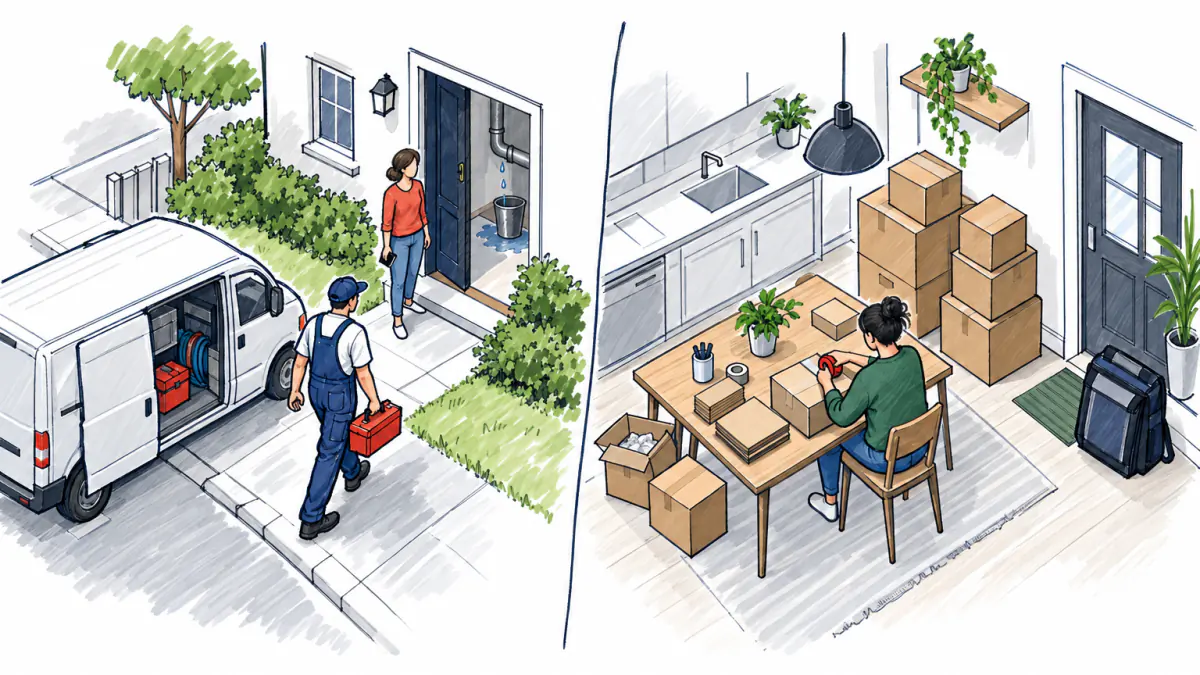
If customers visit you, or you drive to them within a set area, local results decide whether their search turns into a call to you. The unpaid listing costs you hours, with no per-click fee. Each customer it brings in therefore lowers your average cost per customer. Paid local ads, such as Google Ads and Local Services Ads, are a separate channel with their own budget and are outside this guide.
Local SEO is a poor use of your time in three cases:
- You sell only online and have no customer-facing location or service area. To qualify for a Business Profile, a business must make in-person contact with customers during its stated hours, with some exceptions2.
- Your margin is so thin that a customer barely repays the hours spent winning them. The money gate in our method section tests this before you start.
- Your buyers do not search by place, as with a niche software tool or a national wholesaler.
For everyone else, the question is how much local search may cost per customer. Our method section answers it with three formulas.
How to do local SEO: 7 steps
- Know your model: storefront, service-area, hybrid or multi-location.
- Claim and complete your Google Business Profile.
- Find the phrases nearby customers use, and who wins them.
- Build a page for each service and place.
- Get reviews and answer every one.
- Get listed on local sites and earn local links and mentions.
- Track what moves: profile, Maps, Search Console and AI answers.
| step | criterion it feeds | where it shows |
|---|---|---|
| 1 | distance | every surface |
| 2 | relevance, prominence | map pack, Maps, AI answers |
| 3 | relevance | map pack, organic |
| 4 | relevance | organic, AI answers |
| 5 | prominence | map pack, AI answers |
| 6 | prominence | organic, map pack |
| 7 | measures all three | every surface |

Step 1. Know your model: storefront, service-area, hybrid or multi-location
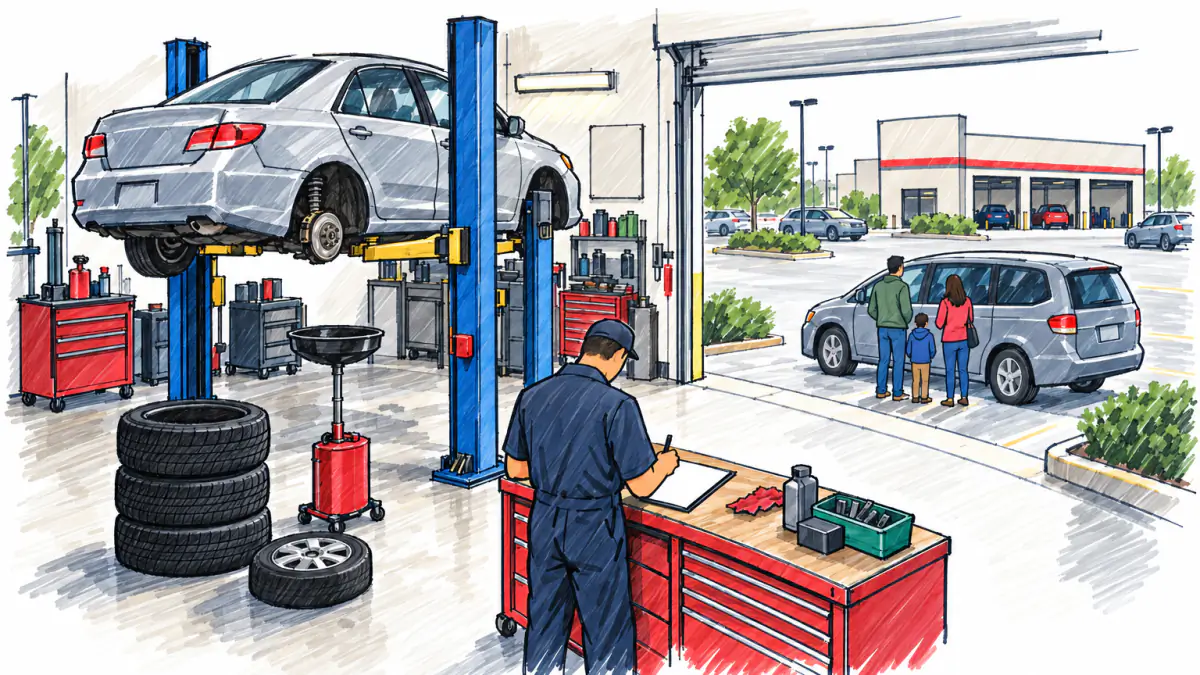
Your model decides what goes on the profile, which pages you build and where you measure rank.
| model | example | address on profile | pages | where to track |
|---|---|---|---|---|
| Storefront | a repair bay customers drive to | shown | one per service | around the bay |
| Service-area | a mobile mechanic | hidden, service area listed3 | one per service and per town served | across the area |
| Hybrid | a bay that also does roadside calls | shown | per service, plus the towns you drive to | both |
| Multi-location | a chain of bays | one profile per location | one per location | per location |
Pick one model and keep it identical everywhere it appears, from the profile and site to every directory. A shop that shows its address on Google and hides it elsewhere sends mixed signals about where it is.
Step 2. Claim and complete your Google Business Profile
Start with eligibility. Google’s rule is that «a business must make in-person contact with customers during its stated hours», with some exceptions2. A storefront meets it at the counter. A mobile mechanic meets it in the customer’s driveway.
Then verify. Google offers verification options based on your business type, public information, region and hours, and recommends video verification where you are eligible for it4. Film the signage and the bay with its tools, and show that you control the business.
Fill every field. The table lists the fields that decide relevance and the mistakes that cost the most.
| field | what to enter | common mistake |
|---|---|---|
| Business name | the name on your sign, invoices and site5 | adding a city, service or slogan |
| Primary category | the one that matches your main service, e.g. auto repair shop | a broad category, or a secondary service as primary |
| Address or service area | street address if customers come to you; service area if you go to them3 | a home address shown to the public |
| Hours | regular hours plus holiday hours | no holiday hours, so searchers drive to a closed bay |
| Services | each service you sell, with a short description and a price range | blank, or a single «auto repair» entry |
| Photos | the storefront from the street, the bay, the team, finished jobs | stock photos |
| Description | what you fix, the area you serve, your answer to the top complaint | a list of keywords |
On names, Google asks that yours match your real-world name as it appears on your storefront and website, and on your stationery, and it does not permit added information5. «Smith Auto» passes. «Smith Auto - Cheap Oil Change Nashville» adds a price claim and a city, and risks a suspension.
Keep the profile current with a monthly routine:
- check hours, and set holiday hours two weeks ahead (assumption: our working lead time, not a Google rule);
- add photos of recent jobs;
- publish one update or offer;
- answer new questions;
- compare the services list against what you sell this month.
Step 3. Find the phrases nearby customers use, and who wins them
You need no paid tool for the first pass. Work through four moves:
- List every service you sell: oil change, brake pads, tire rotation, alignment, check engine light, inspection.
- Add the modifiers people type: «near me», your suburb or neighborhood, «open now», «same day», «emergency», «cheap».
- Type each phrase into Google and write down the autocomplete suggestions.
- Search each phrase from inside your area and mark which ones show a map pack. Those phrases go to your profile; the rest go to your service pages.
The modifier tells you what the searcher wants.
| phrase | what the searcher probably wants |
|---|---|
| oil change near me | a nearby slot today |
| brake repair [suburb] TN | a shop in their own town and a quote |
| check engine light open now | a diagnosis before closing time |
| cheap tires near me | a price comparison |
| alignment cost | a price before they call |
Next, search your three main phrases and read the top map-pack listings for each. For each one, write down the primary category, the rating, the review count, the hours, whether the listing links to a service page or the home page, and whether it shows prices. The gaps in that list are your openings, such as no weekend hours or no published prices.
Leave search volumes out of this step. Once your profile and pages are live, your own impressions in the profile report and in Search Console show real demand (step 7).
Step 4. Build a page for each service and place
Each service that drives calls gets its own page. A brake page and an oil change page answer different searches, and Google can match each to the right query. Each page carries:
- an H1 with the service and the area, such as «Brake repair in [suburb], TN»;
- your business name, plus the address and phone written exactly as on the profile;
- opening hours and an embedded map, plus directions from the nearest landmark;
- prices or price ranges, and what an estimate includes;
- local proof: photos of the bay, reviews from local customers, your warranty terms;
- a call button and a booking form;
- the reason to pick you over the chain down the road.
Add LocalBusiness structured data. Google supports it so you can state your business hours, departments within the business and more6. A repair shop can use a more specific schema.org type such as AutoRepair.
A multi-location business needs one page per location, each carrying that location’s address and hours along with its own photos. Skip a separate «near me» page. The service page with your area in the H1 already answers that search.
Step 5. Get reviews and answer every one
Make asking easy. Google lets you create and share a link or QR code that takes customers straight to your review form7. Print the QR code on a counter sign and on the invoice, and send the link in the pickup text.
Ask at pickup, when the car is fixed and the customer is paying. Ask every customer. Google’s policies forbid paying for a review or offering discounts or free goods and services in exchange for one, and treat incentivized or biased reviews as rating manipulation8. That rules out a free oil change for a five-star review. It also rules out sending the link only to customers you think are happy.
Reply to every review, whether it praises or criticizes you. Name the service in the reply («thanks for trusting us with your brakes»). For a complaint, say what went wrong and what you changed; keep invoice details and customer data private.
Your most frequent complaint theme sets the first message of your replies. In the worked example (example by our method), price drew 6 complaintsex against 2 on qualityex, so replies there lead with the written estimate and the parts used.
Step 6. Get listed, linked and mentioned locally
Three terms cover this step:
- a citation is a listing of your business name and contact details on another site, for example a directory or a map app;
- a link is a clickable reference from another site to yours;
- a mention names your business without a link.
Keep your NAP identical everywhere. «Suite 4» on one site and «#4» on another, or an old phone number on a directory, makes it harder to match the listings to one business.
Local sources a repair shop can reach:
- the local chamber of commerce member directory;
- parts and tire suppliers’ «find an installer» pages;
- a youth sports team or school event you sponsor;
- local news coverage of a community project;
- car clubs and neighborhood groups.
Quality beats count. One link from the suburb’s news site tells Google more about where you are than a stack of directories nobody reads.
Step 7. Track what moves: profile, Maps, Search Console and AI answers
The Business Profile performance report shows searches, views, calls, website clicks, direction requests and bookings9. Read it monthly, and judge each step by calls and direction requests.
Search Console covers your site. Appearances in AI Overviews and AI Mode are counted in the Performance report under the «Web» search type10. Filter by your service pages to see which phrases bring impressions and clicks.
Map rank depends on where the searcher stands. Grid tracking checks your rank from points spread around your shop. You will often see the top spot near the bay and a lower rank a mile out. You can do a rough version by hand, searching from different parts of your area.
AI answers read the same data as the map pack: your profile, your pages, your reviews and your mentions. GEO is the discipline of keeping that data complete and consistent so AI systems can read and cite it. Voice assistants answer from the same sources.
| job | free tool | paid tool category |
|---|---|---|
| profile actions | Business Profile performance report | listings management |
| site queries and clicks | Search Console | rank tracking |
| visits and bookings | web analytics | call tracking |
| map rank around you | searches from different spots | grid rank tracking |
| reviews | Business Profile reviews tab | review management |
Start with the free column. Add a paid tool once a free one stops answering a question you have.
Our method: local SEO as a cost-per-customer decision
We apply five rules when we look at a local business.
Rule 1: work in Google’s order. Eligibility and model first (step 1). Then relevance (steps 2 to 4). Then prominence (steps 5 and 6). Distance is fixed by your address or service area, so you measure it (step 7) and never fake it.
Rule 2: the money gate. These are the formulas our check uses, shown so you can redo them with your own numbers. The inputs come from the example below: price $45ex, 0.6 purchases a monthex, 10 months of lifetimeex, margin 0.3ex and CAC $30ex, all example by our method.
| formula | in words | example arithmetic (example by our method) |
|---|---|---|
| LTV = price × purchases a month × lifetime × margin | what one customer earns you | 45 × 0.6 × 10 × 0.3 = $81ex |
| LTV ÷ CAC | how many times a customer repays their cost | 81 ÷ 30 = 2.7ex |
| payback = CAC ÷ (price × purchases a month × margin) | months until a customer repays their cost | 30 ÷ 8.1 = 3.7 monthsex |
| CAC ceiling = LTV ÷ target ratio | what local search may cost per customer | 81 ÷ 3 = $27 |
The $8.1 monthly contribution per customer is derived from the priceex and marginex, together with the purchase rateex, in the example by our method. The $27 ceiling uses a 3-to-1 target ratio, which is an assumption: a common rule of thumb, not a figure from the check.
Rule 3: the most frequent complaint theme sets the first message. It leads the profile description and the service pages, and it opens each review reply.
Rule 4: the competitors with the most visibility set the bar you check by hand. The check names them. You compare their category, rating, review count, hours and service pages yourself, as in step 3.
Rule 5: no demand figure without a demand source. Where the check finds none, we quote no search volume. You measure your own impressions once the profile and pages are live.
Worked example: an auto repair bay in suburban Nashville
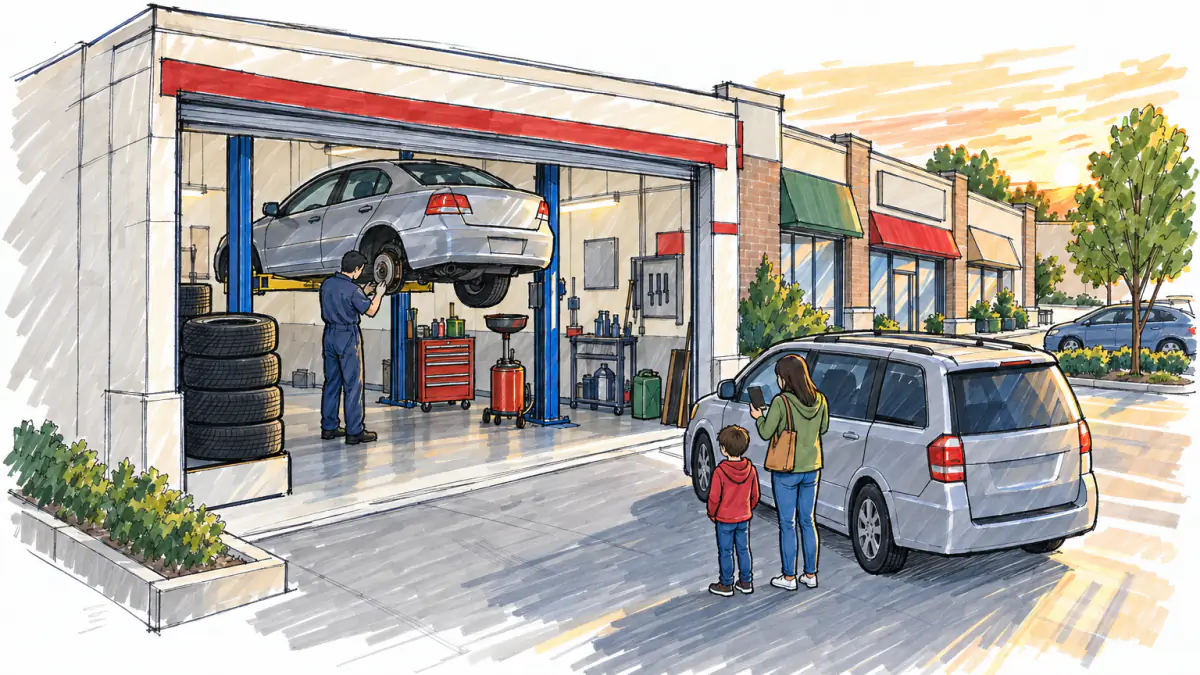
The idea (example by our method): an independent auto repair and oil change shop in a strip-mall bay in suburban Nashville, Tennessee, for commuters and families needing brakes, tires and inspectionsex. The verdict was «Possible, with caveats»ex with a score of 58ex. The check ran 17 search queriesex and read 32 sourcesex.
It found no demand sourceex in the example, so this example quotes no search volume. The one market figure is national: $188.5 billion for 2024, from kenresearch.comex. That number says nothing about the customers within a few miles of one bay.
The check counted 7 direct competitorsex in the example. Visibility share below is the check’s share of visibility in the search results it read (example by our method).
| competitor | type | visibility share |
|---|---|---|
| Auto Repair Center Nashville | direct | 16%ex |
| Valvoline Instant Oil Change | direct | 16%ex |
| Firestone Complete Auto Care | direct | 11%ex |
| Midas | direct | 4%ex |
| Ocean Honda of Brockton | indirect | 16%ex |
Three of the four named direct rivals are national chains. They set the bar for the step 3 hand check: their category, review count, hours and service pages.
Complaints in the example (example by our method) split into price 6ex, quality 2ex, speed 1ex and other 1ex. Price leads, so the shop publishes price ranges on its service pages, puts «written estimate before any work» in the profile description, and answers price in its review replies.
The unit economics in the example come out at LTV $81ex, LTV to CAC 2.7ex and payback in 3.7 monthsex. The check’s CAC of $30ex sits above the $27 ceiling from our method section, which rests on the 3-to-1 assumption. Local search therefore has to bring customers in for less than $27 each. An unpaid profile and service pages can do that; a channel billed per click has to prove it first.
The check named four risks in the example (example by our method):
- a nearby competitor already covers about 65% of the offer, so commuters may pick it over a new bayex;
- price complaints are the most common, so a shop that is not clearly cheaper or more transparent may struggle to win repeat customersex;
- with no state inspection requirement for most cars, the inspection line may draw little demand and tie up bay timeex;
- two nearby shops have already closed, so the local market may not support many independent baysex.
The inspection risk changes the page plan. Tennessee stopped emissions testing in five counties on January 14, 2022; the Metro Council ended Davidson County’s program effective February 5, 202211. The shop builds its first pages for brakes and tires, plus one for oil changes, and adds an inspection page only after its own impressions show people searching for one. The first risk changes the profile: the description and the service pages state what this bay does that the nearby rival does not.
Mistakes that cost you local rankings
| mistake | fix |
|---|---|
| Adding keywords or a city to the business name | use the real-world name from your sign and invoices5 |
| Paying for reviews, or asking only happy customers | ask every customer through the review link, with no reward8 |
| Different name, address or phone across sites | pick one format and correct every listing to match it |
| Showing a home address you do not serve customers at | hide it and list a service area instead3 |
| Treating distance as something to optimize with extra addresses | keep one real location where you meet customers during stated hours2 |
FAQ
What is local SEO in simple terms?
It is the work that gets your business into the map pack and Google Maps, and into nearby results, when people in your area search for what you sell.
How does Google decide which local businesses to show?
Google says local results depend mainly on relevance and distance, along with prominence1. You improve relevance and prominence; your address or service area sets distance.
Can I do local SEO myself?
Yes. The seven steps above need a Business Profile and a website, plus a few hours a month. An agency saves time; it adds no access you lack.
Do I need a storefront address to show up locally?
Can I pay customers for reviews or only ask happy ones?
No. Google forbids incentives for reviews and treats biased reviews as rating manipulation8. Ask every customer through your review link.
What local SEO tools do I actually need?
Start with the free Business Profile performance report and Search Console, then add free web analytics. Add grid rank tracking or review software later.
Does local SEO help me show up in AI answers and voice search?
Yes. AI answers draw on your profile and pages, and on your reviews. Search Console counts AI Overviews and AI Mode appearances in web search data10.
Is local SEO worth it for my business?
It is worth it if customers come to you or you serve a defined area, and each customer repays their cost. Run the money gate first; after that, check calls and direction requests each month.
Sources
- support.google.com, 09/30/2024
- support.google.com, 10/04/2026
- support.google.com, 03/10/2025
- support.google.com, 10/02/2026
- support.google.com, 10/02/2026
- developers.google.com, 10/02/2026
- support.google.com, 10/03/2026
- support.google.com, 10/02/2026
- sterlingsky.ca, 09/27/2026
- otterly.ai, 08/04/2026
- nashville.gov, 02/08/2022
Check your idea for free
Describe your idea and the check collects demand, competitors, complaints and prices, with sources.