Best Franchises to Own in 2026: What the Rankings Show and How to Check One

No single franchise is the best to own, because the big rankings measure different things. Franchise Times ranks by systemwide sales and puts McDonald's first1. Franchise Direct weighs longevity, sales, location growth and support and puts PIRTEK first2, and Franchise Business Review ranks by an owner survey3. The best franchise for you ranks high on more than one list and fits your cash and your role; before you sign, confirm it discloses its numbers in the FDD and check that it works in your local market.
Four rankings, four different questions
Each ranking answers one question and leaves the others open. Read the measure before you read the order.
| Ranking | Publisher | What it measures | Top entry | What it cannot tell you |
|---|---|---|---|---|
| Top 400, 2026 | Franchise Times | Global systemwide sales of U.S.-based systems | McDonald’s: $139.4 billion, 45,356 units1 | What one owner keeps |
| Top 100 Franchises, 2026 | Franchise Direct | Longevity, sales, yearly location growth, franchisee support | PIRTEK, then The UPS Store2 | How the factors fit your budget |
| Top 200, 2026 | Franchise Business Review | Survey of more than 26,000 franchisees from over 330 brands | NextHome, then Kona Ice3 | Investment size or owner profit |
| Franchise 500, 2026 | Entrepreneur | More than 150 data points in five pillars | Jersey Mike’s Subs4 | Which pillar lifted a brand |
Entrepreneur scores five pillars: costs and fees, size and growth, franchisee support, brand strength, and financial strength and stability4. A size ranking rewards big systems, an owner survey can crown a small one, and a composite blends both, so two brands with the same rank can get there for opposite reasons.
Systemwide sales add up the revenue of every unit: they show demand for the brand, not the margin of the one location you live on.
Brands at the top of the 2026 rankings
A brand appears here only if a 2026 edition confirms its position. In those positions no brand tops two lists.
| Brand | Sector | Ranking and position | Hard figure in the source | FDD item to read first |
|---|---|---|---|---|
| McDonald’s | Quick-service burgers | Franchise Times, #1 | $139.4 billion sales, 45,356 units1 | Item 7, initial investment |
| Jersey Mike’s Subs | Sub sandwiches | Entrepreneur, #1 | Position only4 | Item 19, unit sales |
| PIRTEK | Maintenance services | Franchise Direct, #1 | Position only2 | Item 20, outlets opened and closed |
| The UPS Store | Shipping and printing | Franchise Direct, #2 | Position only2 | Item 6, ongoing fees |
| NextHome | Real estate | Franchise Business Review, #1 | Position only3 | Item 6, fee structure |
| Kona Ice | Mobile shaved ice | Franchise Business Review, #2 | Position only3 | Item 20, transfers |
| Visiting Angels | In-home senior care | Franchise Business Review, #3 | Position only3 | Item 19, if disclosed |
The full lists run to 100, 200, 400 and 500 brands (links in the notes): build a long list from them, then cut it with the filters below.
Decide what “best” means for you
Pick the profile that matches your goal, then read the ranking that measures it.
- Cash flow first. No ranking measures what an owner takes home: start with Item 19 of the FDD, then see how owners rate the system in Franchise Business Review’s survey.
- Brand power. Franchise Times answers this: systemwide sales and unit counts show how far the brand reaches. Large systems usually ask for a larger build-out, so confirm the amount in Item 7.
- Semi-passive or multi-unit. You manage managers, so support and growth matter most: Franchise Direct scores both, and Franchise Business Review adds the owners’ view.
- Low entry cost. Entrepreneur’s costs-and-fees pillar is the closest measure. The figure you plan on is the range in Item 7.
If no profile fits, a franchise may be the wrong vehicle. Read how to choose a niche, find an idea for your budget, or browse business ideas for 2026 that are not franchises.
How franchising works, in money terms
For the definition, see what a franchise is. The sector is large: the IFA projects franchise output of $921.4 billion and 845,000 franchise establishments in 20265. Your money moves in five lines.
- The initial franchise fee, paid to the franchisor before you open. Items 5 to 7 of the FDD cover initial and ongoing costs6.
- Item 7 estimates what the build-out will cost, with equipment and opening stock included. For scale, Taco Bell’s current Entrepreneur listing shows an initial investment of $934,750 to $4,312,2007.
- The royalty, a share of gross sales paid every period. Most royalties run 4% to 8% of gross sales, with 5% to 6% typical8. Many systems add an advertising fund contribution; its rate is in Item 6.
- Your margin: revenue minus cost of goods, labor, rent, royalty and ad fund. The royalty comes off revenue, before you are paid.
- Territory rights: the area and term in the agreement; a protected territory limits same-brand units near you.
Five filters for your shortlist
Run each brand through these in order. Each filter has a stop condition.
- It appears on two or more rankings, or on one list that publishes its method. Stop otherwise.
- Your cash covers the top of the Item 7 range plus a reserve for the months before break-even. Stop if it does not, even with an SBA loan and your equity.
- Item 19 exists. The FTC rule permits these figures and does not require them9. Stop if Item 19 is empty and current owners will not share their numbers.
- Item 20 shows a system that keeps its units. Stop if closures and transfers rival openings over the years shown.
- The territory is free and the local market holds room for you. Find the local competitors and check demand. Stop if the area is crowded and no demand is measured.
Three to five names should survive. Those go to FDD reading and owner calls.

Read the FDD before you trust any list
The franchisor must give you the Franchise Disclosure Document at least 14 calendar days before you sign a contract or make a payment10. The FTC tells buyers to read each of its 23 numbered items6. Read these five first:
- Item 7, the estimated initial investment, as a range.
- Item 6 lists the ongoing fees, such as the royalty and the ad fund.
- Item 19, financial performance representations. If the franchisor makes any, they must appear here9.
- Item 20, franchisee and system information6: outlets opened, closed and transferred, plus contact lists of current and former owners.
- Item 21, the franchisor’s financial statements6.
Then call owners from the Item 20 lists, including those who left. Ask what they invested against the Item 7 range, how many months break-even took, how support felt in year one, and if they would buy again. For a full question set, use our interview questions for current owners.
Our method: check the territory before the brand
A ranking describes the brand. Our idea check describes the territory you would buy: the market, the direct competitors with each one’s share of visibility, the complaint themes, the unit money and the risks, each scored 1 to 3 for probability and impact.
The check’s unit block applies these formulas:
| Quantity | Formula |
|---|---|
| Contribution per customer per month | price × purchases per month × margin |
| LTV | price × purchases per month × lifetime in months × margin |
| LTV to CAC | LTV ÷ CAC |
| Payback, months | CAC ÷ contribution per month |
For a franchise we add a layer on top. It is our editorial rule; the check does not apply it:
- Replace the check’s norm-based price and margin with the franchisor’s numbers where Item 19 gives them.
- Take the royalty and the ad fund from Item 6 off the margin.
- Take the initial investment from Item 7, since the check does not estimate it.
- Use the check’s risk list as your questions for current owners.
Run the numbers in the unit economics calculator. See unit economics in plain words for the formulas and the break-even point for the reserve in filter 2.
Worked example: a cleaning franchise in suburban Indianapolis
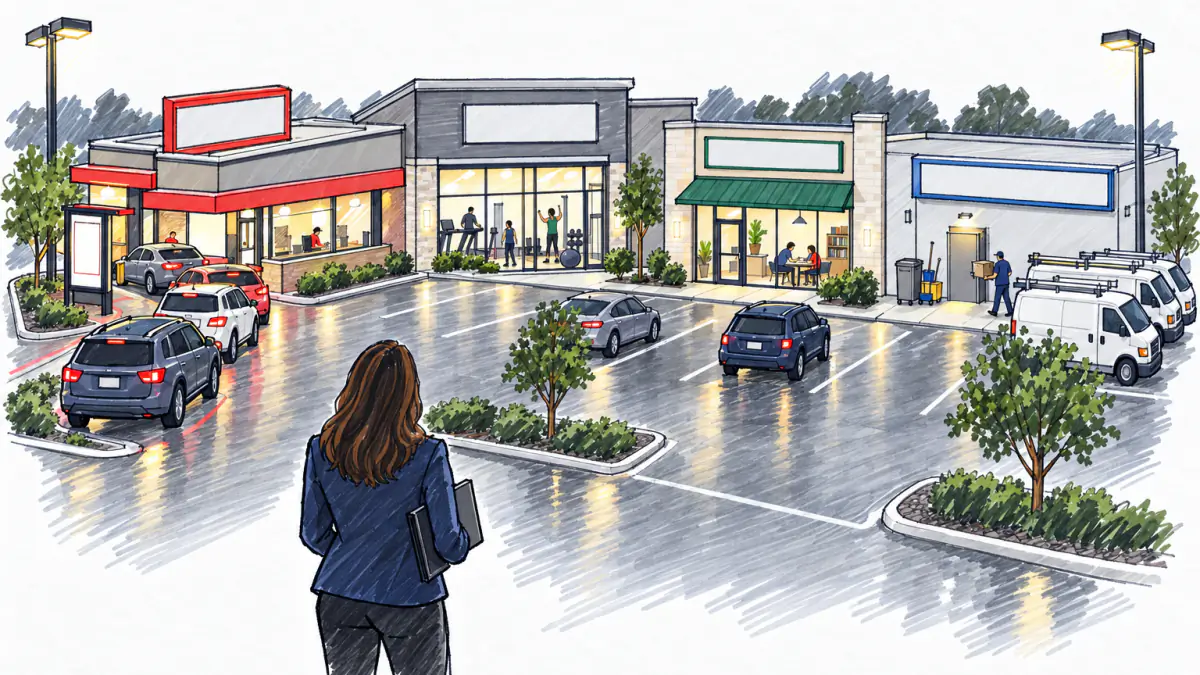
We tested this idea with our method: «Franchised residential cleaning service in suburban Indianapolis, Indiana: dual-income homeowners booking recurring biweekly house cleans»ex. The check names no franchisor; it tests the category in this territory. It returned «Possible, with caveats»ex with a score of 63ex.
Market
The check measured no search demand (its demand source is noneex) and cites a national market of $18.8bn for 2024 from IBISWorldex, not this suburb’s (example by our method). Narrow it with market size (TAM, SAM, SOM) and test demand before you sign.
Competition and complaints
The check counted 10 direct competitorsex (example by our method). Five hold these visibility shares:
Unit money
| Input or result | Value (example by our method) |
|---|---|
| Price per visit | $40ex |
| Visits per month | 2ex |
| Customer lifetime | 12 monthsex |
| Margin | 0.35ex |
| CAC | $30ex |
| LTV | $336ex |
| LTV to CAC | 11.2ex |
| Payback | 1.1 monthsex |
In our example, the contribution per customer is $28 a month (40 × 2 × 0.35; the inputs are assumptions). The check itself flags these inputs: «The unit economics are an estimate from general local-services norms, not measured in this market, so the margin and retention figures may be wrong.»ex
Now apply our franchise layer. With a royalty of 6% of revenue (assumption; the real rate is in the franchisor’s Item 6, and typical royalties run 4% to 8%8), the margin falls from 0.35 to 0.29. In our example, LTV is then 40 × 2 × 12 × 0.29 = $278.40, and payback is about 1.3 months, 30 ÷ 23.2 (assumption: the same 6% royalty). An ad fund contribution would cut the margin again.
What the example tells a buyer
In our example, the territory is crowded (one rival holds 30% of visibility), no demand was measured and the margin is a norm, so by filter 5 it stops here until a demand test says otherwise. Next come Item 19 for real margins, calls to owners in comparable suburbs and a demand test; see business risks before launch for the risks.
Paying for it: SBA 7(a) and 504
The SBA caps a 7(a) loan at $5 million and a 504 loan at $5.5 million11. Under SBA SOP 50 10 8.1, the franchisor’s brand must be listed on the SBA Franchise Directory as an approved brand, and a start-up must inject equity of at least 10% of total project costs12. Check the directory before you sign anything. Lenders also ask for a plan; see the business plan a lender asks for.
FAQ
What is the best franchise to own?
The best franchise to own is one that ranks high on more than one 2026 list, fits your cash and your role, discloses owner numbers in FDD Item 19, and has room in your local market. No single brand leads every list. McDonald’s leads by systemwide sales1, PIRTEK leads Franchise Direct2, NextHome leads the owner survey3, and Jersey Mike’s Subs leads the Franchise 5004. Run your short list through the five filters and the FDD reading above.
Sources
- franchisetimes.com, 10/09/2026
- franchisedirect.com, 10/08/2026
- res.cloudinary.com, 10/16/2026
- growthfactor.ai, 12/02/2025
- franchise.org, 02/19/2026
- ftc.gov, 09/25/2025
- entrepreneur.com, 10/14/2026
- thefranchisorblueprint.com, 04/29/2026
- ftc.gov, 08/16/2026
- gao.gov, 11/03/2025
- sba.gov, 04/30/2026
- partneresi.com, 09/26/2026
Check your idea for free
Describe your idea and the check collects demand, competitors, complaints and prices, with sources.