Pitch deck: what goes on each of the 12 slides, with a template and a worked example

A pitch deck is a short slide presentation for investors. It covers your product, your customers, the market size, how you make money, who runs the company and how much you are asking for. Partners, grant committees and large customers read decks too. Common guidance puts a deck at 10 to 20 slides, with 10 to 15 the most cited range1. Investors often read it before they meet you, so each slide makes one point and carries one number you can source. Below are the 12 slides in order, a template and a deck filled in from a real idea check.
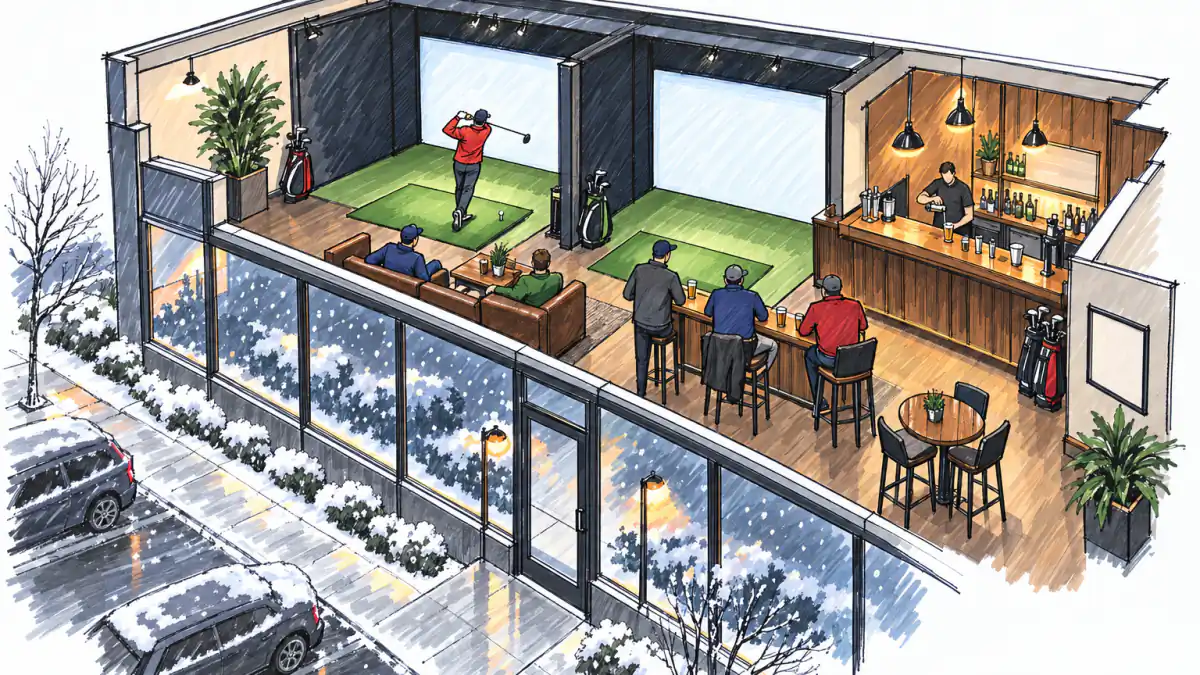
What a pitch deck is and what it is for
A pitch deck cuts a business plan down to slides that each carry one claim. It needs the same research as a full plan: market size, rivals, prices, costs. The format is what changes. Each slide carries one point, and each number on it carries its source.
The deck’s job is to get you the next meeting. It works when an investor asks for a call already knowing how much you want and what the money pays for. So the ask slide names a figure; “we are raising a round” is not an ask.
Four kinds of readers open decks, and each looks at different slides:
- Investors read the market, the business model, the team and the ask.
- Partners read what you bring them and how the deal splits revenue.
- Grant committees read the problem, the outcome you promise and the budget line by line.
- Large customers read the problem in their own terms, proof that you deliver, and the price.
You will usually keep two versions of the same deck.
| Version | How it is read | What changes |
|---|---|---|
| Send-ahead | Alone, before any meeting; investors spend about 2 minutes 42 seconds on a deck on average2 | Full sentences, a source line under every number, sent as a PDF |
| Presented | On a screen while you talk | One headline and one figure per slide in large type; you say the rest |
Send the first version when someone asks for “your deck”. Keep the second for the meeting room or the video call.

The 12 slides of a pitch deck, in order
Sequoia Capital’s published guidance for a startup pitch runs through company purpose, problem, solution, why now, market potential, competition and alternatives, business model, team and financials3. The 12 slides below follow that order, add traction and go-to-market after the business model, and close with the team, the financials and the ask, which investors raise next.
The sample lines come from the worked example below: an indoor golf lounge we ran through our idea check. All sample figures are from that example and use our method.
| # | Slide | What it shows | Sample line | Where the number comes from |
|---|---|---|---|---|
| 1 | Cover | Name and a one-line pitch | Indoor golf simulator lounge with bar service in a suburban Minneapolis strip-mall unitex | The idea line of your check |
| 2 | Problem | Who hurts and how, with evidence | 3 complaints on reliability and trustex, 3 on service and supportex | Complaint counts by theme |
| 3 | Solution | What you do about the problem | Hourly bays, after-work leagues, winter memberships, a bar | None; this is your product |
| 4 | Why now | What changed that opens the window | Cut it if you have no sourced change | A sourced fact, or no slide |
| 5 | Market | TAM, then SAM and SOM built bottom up | TAM $1.7 billion (2023)ex | The check’s TAM plus your own bottom-up build |
| 6 | Competition | Named rivals and how you differ | 6 direct competitorsex; Five Iron Golf holds 27% of visibilityex | Direct count and visibility shares |
| 7 | Business model | Price, frequency, margin, CAC, LTV, payback | $45 priceex, 4 purchases a monthex, LTV $216ex | The check’s unit economics block |
| 8 | Traction | Sign-ups, pre-sales, demand | The check found no search-demand figureex | The demand field, or your own test |
| 9 | Go-to-market | The first channel and its cost | After-work leagues as the first channel | None; your plan |
| 10 | Team | Why these people can run this | Names, roles, one relevant result each | None; your résumés |
| 11 | Financials | 12 to 36 months of revenue and cost | Built from the unit inputs on slide 7 | Your financial model |
| 12 | The ask | Amount, use of funds, milestones | Amount from the fit-out cost plan | Your cost plan |
The table works by these rules: each slide makes one point, and each number traces to a line in the right column or carries the mark “assumption”. If a slide’s right column is empty, consider cutting it: drop a “why now” slide with no sourced change rather than fill it with a trend you cannot cite.
The order shifts with your stage. Before revenue, lead with the problem and the team, because that is what an investor is betting on. Once you have paying customers, move traction up to slide 2 or 3. Numbers that already happened outrank any market estimate. For an early-stage investor meeting, 10 to 15 slides is the most cited range, and Series A decks can run to 15 to 201. To get down to 10, merge solution with why now, and go-to-market with business model.
Risks and the full financial model go into an appendix after slide 12, along with the cap table and long team bios. You open the appendix when someone asks. The main deck stays at one idea per slide.
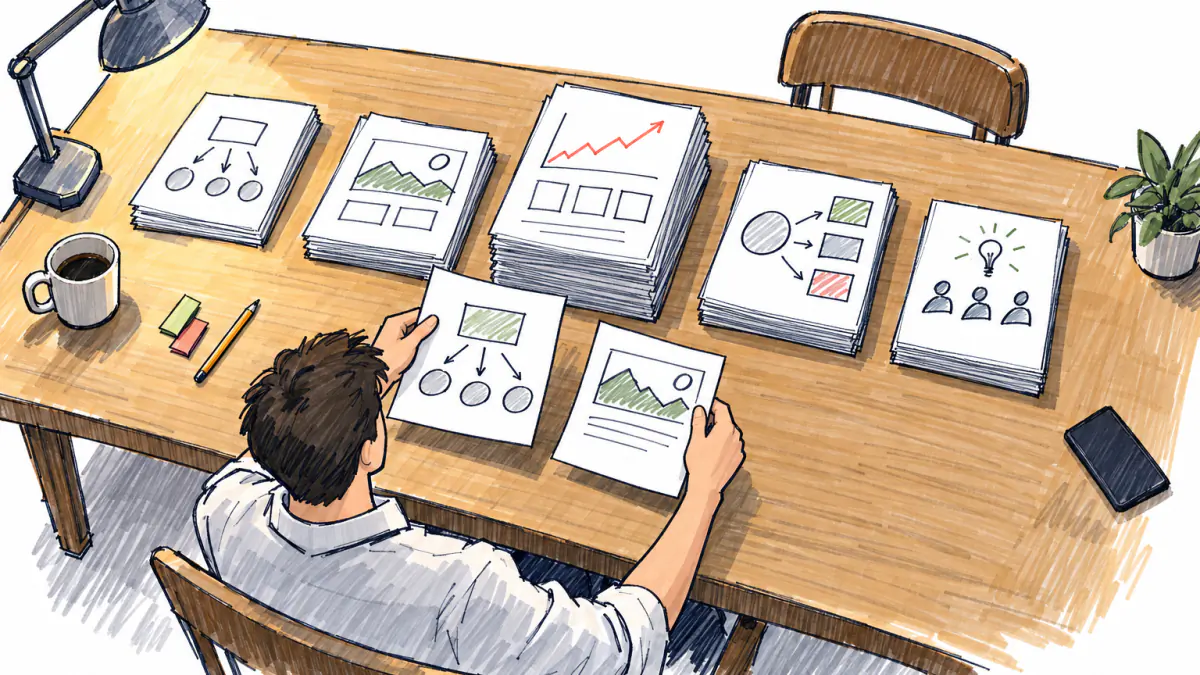
How to make a pitch deck in 7 steps
Each step below ends with one output. When all seven outputs exist, the deck exists.
- Write the company in one sentence. Sequoia’s guidance opens with company purpose, defined in a single declarative sentence3. Name the customer and the product, and say where you sell. Output: the cover line.
- Collect every number with its source. Market size, competitor names, price, purchase frequency, margin and acquisition cost each need a line that says where they came from: an idea check, a supplier quote, a test you ran. Anything else gets the word “assumption” beside it. Output: a source sheet, one row per figure.
- Group the slides into four pillars, in the table’s order. Story holds cover, problem, solution and why now. Market holds market size and competition. Model holds business model, traction and go-to-market. People and money hold the team and the financials, and end with the ask. Output: a 12-slide outline that a reader can follow by pillar.
- Write each headline as a claim. “Business model” is a label; “Each customer repays acquisition cost in under a month” is a claim, and in our golf example it rests on a payback of 0.9 monthsex. Output: 12 headlines that tell a story when skimmed on their own.
- Build the number slides. Size the market from the bottom up: units times customers per unit times spend per customer. Put the five unit economics inputs on the model slide so a reader can change them. Output: the market and business model slides, each with its source lines.
- Tailor the emphasis to the reader. An angel reads team and market first. A lender reads the financials and the collateral. A grant committee reads the budget and the outcome. Reorder, and leave the numbers unchanged. Output: one deck per audience, from the same source sheet.
- Design and test. Keep to 2 to 3 colors and 2 to 3 fonts4. For the presented version, Guy Kawasaki’s 10/20/30 rule is a working limit: 10 slides, no more than 20 minutes, no font smaller than 30 points5. Then give the send-ahead PDF to someone who has not seen it, and stop them at the average reading time of 2 minutes 42 seconds2. Ask what you sell and how much you want. Output: two files, one to send ahead and one to present.

Worked example: a deck filled in from an idea check
The idea was “Indoor golf simulator lounge with bar service in a suburban Minneapolis strip-mall unit: after-work leagues, winter memberships and hourly bay rentals”ex. The check returned the verdict “Worth building”ex with a score of 67ex, an example by our method. A local venue like this raises from angels or borrows from a lender, which is the deck many first-time founders write. The check fills five slides: cover, problem, market, competition and business model. It leaves two open, traction and the ask, and both are shown as gaps below. The risk appendix and the method behind every figure close the example.
Cover and problem
The cover carries the idea line as written. The problem slide groups complaints about existing offers by theme. In the example by our method, 3 complaints concern reliability and trustex and 3 concern service and supportex; the remaining themes, otherex, paperwork and paymentex and qualityex, get one complaint each. That makes 9 complaints in total, by our method. Nine is a small base, so the slide quotes counts instead of percentages, and the founder adds interviews before the meeting.
Market
The check cites a TAM of $1.7 billion for 2023, from gaugius.com, an example by our methodex. A top-down figure from 2023 says little about one strip-mall unit in a Minneapolis suburb. The slide shows it once, then builds SAM and SOM from the bottom up. Start with golfers within a drive-time radius who play in winter: that is the SAM. The SOM is the part of them one unit can serve, capped by the bay hours per week it can sell.
Competition
The check counted 6 direct competitorsex. The table lists five of the rivals it measured, of three types, with each one’s share of visibility in the check’s searches, in %, as an example by our method.
| Competitor | Type | Share of visibility |
|---|---|---|
| Five Iron Golf | Direct | 27%ex |
| Dryvebox | Indirect | 20%ex |
| TwinCitiesGolf.com | Direct | 11%ex |
| Mulligans Indoor Golf | Direct | 9%ex |
| Minneapolis Park & Recreation Board | Alternative | 5%ex |
The slide names these five and states one difference per row. A deck that says “no direct competitors” next to this table loses the reader at slide 6.
Business model
The inputs, all an example by our method: price $45ex, 4 purchases a monthex, a 12% marginex, a 10-month customer lifetimeex and a CAC of $20ex. The outputs: LTV $216ex, LTV to CAC of 10.8ex, payback in 0.9 monthsex.
Those ratios are high, and an investor will test the inputs first. In our example, you need to defend two lines: the example’s $20 CAC for a venue that needs local awareness, and its 12% margin on a bar-and-bays business. The slide shows all five inputs so a reader can change them. In our example, a CAC of $60 (assumption) would cut LTV to CAC to 3.6 and stretch payback to 2.8 months. Write that line in your notes before an investor works it out for you.
Traction
The check found no search-demand figure: its demand source is “none”ex. The traction slide says so and replaces the gap with evidence the founder collects: league sign-ups, winter membership pre-sales, a waitlist for bay hours. No figures appear on the slide until those tests produce them.
The ask
The check gives no fit-out cost, so the ask starts as a formula, not a blank: the amount equals the quotes for the simulators, the build-out and the bar, plus rent and payroll for the months until the lounge breaks even, plus a reserve. Fill each line from a quote. Use of funds is the same lines as shares of the amount, and each milestone names what the money buys first, such as the opening date or the first league season.
Appendix: risks
The check listed four risks, quoted here as an example by our method:
- “Mulligans Indoor Golf already covers most of the offer, so bay rental buyers may choose it by default.”ex
- “Alcohol and tobacco rules must be met before serving drinks, which could delay opening or add cost.”ex In Minneapolis, any bar or restaurant that serves alcohol on site, including beer and wine, needs an on-sale liquor license from the city6. Put the license and its timeline on the milestone slide.
- “Two nearby golf venues have already closed, so the local demand for indoor golf may not last through the year.”ex
- “Equipment may be stolen or damaged in a strip-mall unit, adding repair costs.”ex
Each risk gets one mitigation line. Keep the list in the appendix and open it when asked.
Our method in the open
The check behind this example ran 17 search queriesex and drew on 33 sourcesex, an example by our method. These are the rules it applies.
Unit economics. In our example, LTV is price × purchases per month × margin × lifetime in months, using the example’s inputs: $45 × 4 × 0.12 × 10 = $216. In our example, LTV to CAC is LTV ÷ CAC, with both figures taken from the example: $216 ÷ $20 = 10.8. Payback in months equals CAC ÷ (price × purchases per month × margin). The monthly contribution per customer is $45 × 4 × 0.12 = $21.60, an example by our methodexexex, so payback is $20 ÷ $21.60 = 0.9 months.
Competitors. The check counts direct rivals and reports each competitor’s share of visibility, in %, as measured in the check’s searches.
Pains. Complaints about existing offers are grouped by theme with a count per theme. The deck quotes counts, never percentages.
Evidence rules for the deck:
- Every number on a slide carries its source line.
- A figure with no source is labeled “assumption” on the slide.
- A top-down figure such as TAM never stands alone; SAM and SOM are built bottom up.
- A field the check could not fill is shown as a gap and never filled with a guess.
Pitch deck template: what to check before you use one
Template galleries mix investor decks with other kinds of slides: portfolios and brand guides sit next to sales decks. Run five checks before you open one:
- The slide headings follow investor order: problem before solution, market before model, the ask last.
- The slide count fits your stage, 10 to 15 for most early rounds1.
- The file opens in an editor you already use, in a common editable format.
- “Free” means free to download and edit, with no watermark that appears at export.
- Each slide gives a prompt for content, beyond a layout to fill.
A template that fails check 5 gives you design and leaves the work of deciding what each slide says.
Download our pitch deck template
Our pitch deck template is a PowerPoint file with 10 slides: company, problem, solution, market, competition, business model, traction, risks, team and the ask. It follows Sequoia Capital’s 10-slide order, with traction and risks in place of why now and vision and the financials folded into the ask, and each slide carries a prompt and a source line. Add why now, go-to-market and financials from the table above when your stage needs them. Two more of our templates feed the deck. The files are free; you sign up to download them.
Pitch deck template, PowerPoint file10 slides, each with its prompt and source line Competitive analysis template, Excel file
competitors, grid, complaints, SWOT, positioning: for the competition slide Lean canvas template, Word file
9 boxes on one page: for the problem, solution and business model slides
Whichever file you start from, add three pieces:
- The business model slide: five input boxes for price, purchases per month, margin, CAC and lifetime, with LTV and payback calculated from them.
- A risk table with three columns: risk, source, mitigation (the file gives risks a main slide; the outline above sends the full table to an appendix).
- Source sheet: one row per figure, with its source or the word “assumption”.
Run the idea check to fill the cover, problem, market, competition and business model slides from its report, as in the worked example.
Make it yourself or hire a designer
The content and the numbers stay yours in either case. A designer lays out decisions you have already made. Write the headlines, fill the source sheet, then hand both over.
Pitch deck examples from funded startups
These five decks are public. Each row lists only facts of that deck or its round.
| Company | Year | Round | Slides | Study it for |
|---|---|---|---|---|
| UberCab | Late 2008 | Concept deck | 257 | Pitching before the product exists |
| TheFacebook | Spring 2004 | Advertiser media kit8 | Not checked | Engagement shown before revenue |
| 2004 | Series B, $10 million, Greylock9 | 379 | Length at a later round | |
| Buffer | 2011 | Seed, $450,000 from 18 investors10 | Not checked | The traction slide |
| SEOmoz (Moz) | 2012 | Series B, $18 million, Foundry Group11 | Not checked | The round itself |
UberCab. Garrett Camp wrote the 25-slide concept deck in late 2008 and published it on Medium in 20177. Read it as a deck for an idea with no product yet: the market and the difference from existing options carry it.
TheFacebook. Eduardo Saverin built the spring 2004 deck as a media kit to sell advertising on thefacebook.com, and it led with engagement metrics that preceded revenue8. If you have users and no revenue, its traction slides are the model.
LinkedIn. The Series B deck raised $10 million from Greylock in August 2004, and it ran 37 slides; Reid Hoffman later published it9. A 37-slide deck at a Series B sits outside the 10-to-15 range quoted for early rounds. Later rounds carry more history, and their decks grow with it.
Buffer. Joel Gascoigne describes the 2011 seed round as $450,000 from 18 investors10. You will often see it reported as $500,000; the founder’s own figure is the one to cite.
Moz. SEOmoz received an $18 million Series B from Foundry Group, with an additional investment from Ignition Partners, in 201211.
Pitch deck mistakes that cost the next meeting
- A market slide with only a top-down TAM. Fix: show TAM once. Build SAM and SOM from units and customers.
- “No competitors.” Fix: name direct rivals and alternatives, one difference each.
- Ratios without inputs. Fix: show price, frequency, margin, CAC and lifetime next to LTV and payback.
- A gap filled with a guess. Fix: label it “assumption” or state that the figure is missing and how you will get it.
- No amount on the ask slide. Fix: one figure, three uses of funds, the milestone it buys.
- Fonts below 30 points in the presented version5. Fix: move the detail into the send-ahead PDF.
FAQ
What is a pitch deck?
A pitch deck is a short slide presentation for investors: it shows what you sell and to whom, the market size, how you make money, who runs the company and the amount you ask for. Decks also reach partners and grant committees, and large customers read them as well.
How do I create a pitch deck?
Write the company in one sentence, collect every number with its source, and arrange 12 slides in investor order. Write each headline as a claim and build the market and model slides from the bottom up. Test the PDF on a reader who has under three minutes.
Where can I get a pitch deck template?
Download our free 10-slide PowerPoint template above, or build the 12-slide outline from the table. If you use another one, check slide order, slide count, editable format, what “free” covers, and whether it prompts for content.
What goes on the financial slides if I have no revenue yet?
Put your unit economics on the model slide: price, purchases per month, margin, CAC and lifetime, each with a source or the word “assumption”. Build the 12-to-36-month projection from those inputs and show missing figures as gaps.
Run the check first, then build the 12 slides from its report.
Sources
- slideegg.com, 07/24/2026
- experience.dropbox.com, 10/08/2026
- sequoiacap.com, 03/15/2019
- canva.com, 10/16/2026
- guykawasaki.com, 12/30/2005
- minneapolismn.gov, 09/03/2026
- heydecks.com, 08/04/2026
- pitches.ai, 10/06/2026
- venturemage.com, 04/23/2026
- attach.io, 10/16/2026
- moz.com, 05/01/2012
Check your idea for free
Describe your idea and the check collects demand, competitors, complaints and prices, with sources.